





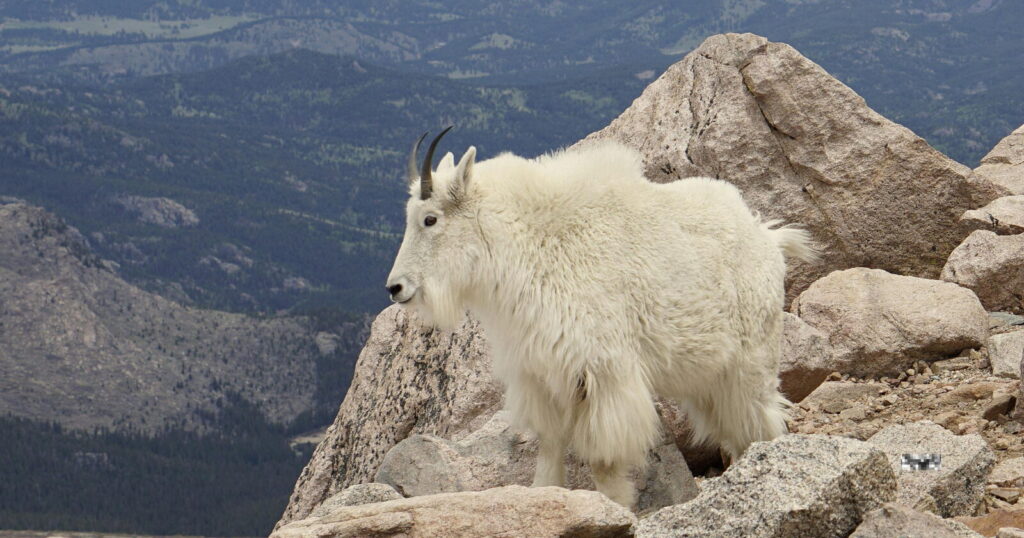
Near-vertical cliffs, ledges only a few centimetres wide and rock covered in snow and ice are places many animals avoid. For the mountain goat, this terrain is home, helping it survive and escape predators.
The mountain goat, Oreamnos americanus, is an even-toed hoofed animal of the family Bovidae. It is native only to the high mountains of western North America, from Washington, Idaho and Montana through western Canada up to Yukon and Alaska.
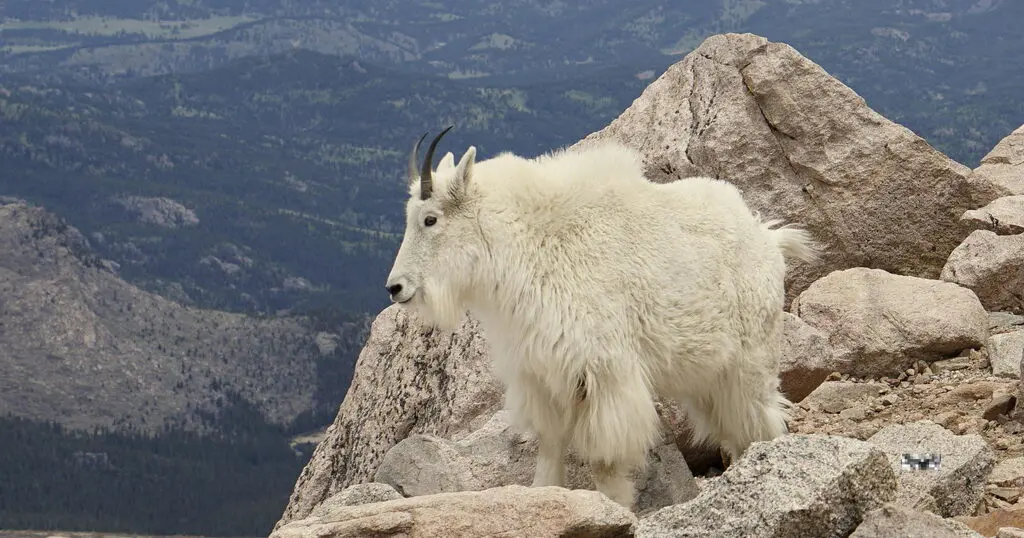
It mostly lives in subalpine and alpine zones full of cliffs, boulders and steep paths.
Although its common name includes the word “goat”, it is not a true goat of the genus Capra, the group that includes wild goats and the ancestors of domestic goats.
Instead it belongs to the goat-antelopes, and is more closely related to the serow, goral, chamois and takin than to ordinary goats. The mountain goat is the only living species in the genus Oreamnos. The name comes from Greek words for mountain and lamb, a clear nod to its white coat and life in the high mountains.
Although mountain goats and domestic goats both belong to the family Bovidae and subfamily Caprinae, their lineages split millions of years ago. The animals most like it in shape and way of life are mountain animals of Asia and Europe such as the chamois, goral, serow and takin.
The Alaska Department of Fish and Game says the mountain goat is North America’s only hoofed mountain animal in the group once called Rupicaprinae, or “rock goats”, which have fairly short horns and can live in rough, steep terrain.
Despite being a large animal with a striking white coat, it was described by science fairly late, in 1816. The Alaska Department of Fish and Game still lists it as one of North America’s least-studied large mammals.
A double white coat that handles -46°C
Living above the treeline means facing strong winds, snow and long periods below freezing, so the mountain goat’s body is covered with two layers of fur.
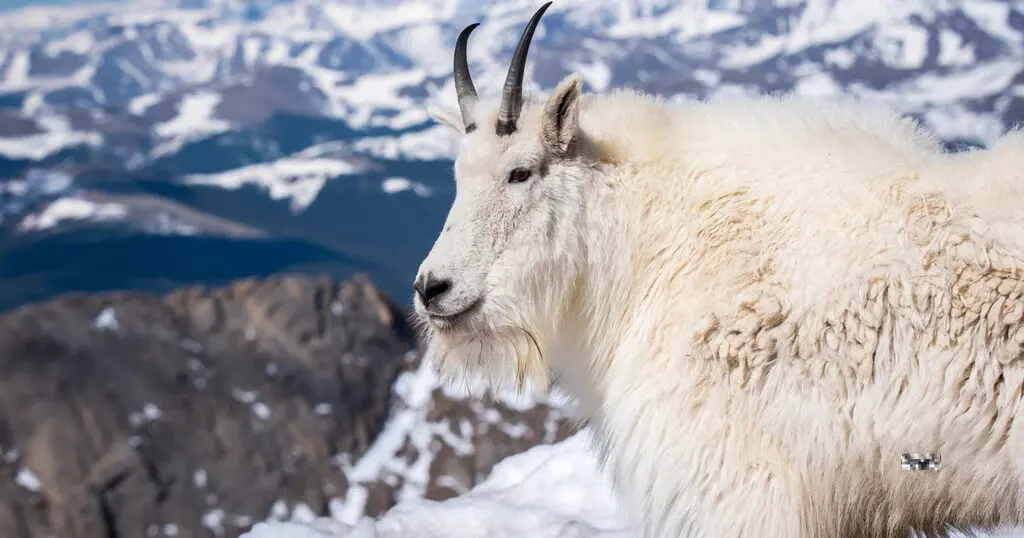
Inner layer: soft, fine and dense wool that keeps body heat in.
Outer layer: longer guard hairs that are hollow inside, which block wind and moisture.
The winter coat can grow very long. The Alaska Department of Fish and Game says hair along the back, rump, shoulders and parts of the neck can reach 8 inches, more than 20 centimetres. Long hair on the legs makes it look as if it is wearing fluffy trousers.
This coat lets it withstand winter temperatures as low as about -46°C and winds of about 160 km/h.
In summer the thick coat becomes a burden. Mountain goats start to moult around June, rubbing against rocks and trees to shed old fur. A new, shorter and smoother summer coat appears in July, and the full winter coat grows back by around mid-October.
Males can weigh over 170 kg and still stand on cliffs
Males and females look very alike. Both have white coats, a beard on the chin, a short tail and slender black horns that curve backwards. The main difference is body size.
The Alaska Department of Fish and Game says adult females weigh about 82 kg on average, while males average about 127 kg by late summer, about 40% bigger than females.
Many adult males weigh more than 136 kg, and the largest male the department has weighed was 385 pounds, about 175 kg.
National Geographic says mountain goats weigh about 45–136 kg overall and stand about 3.5 feet (1.07 metres) at the shoulder.
Yet even at the weight of two adult people, it can balance amazingly well on very narrow ledges.
The secret under its feet: natural climbing shoes
If the thick coat is its tool against cold, its hooves are what let the mountain goat rule the cliffs.
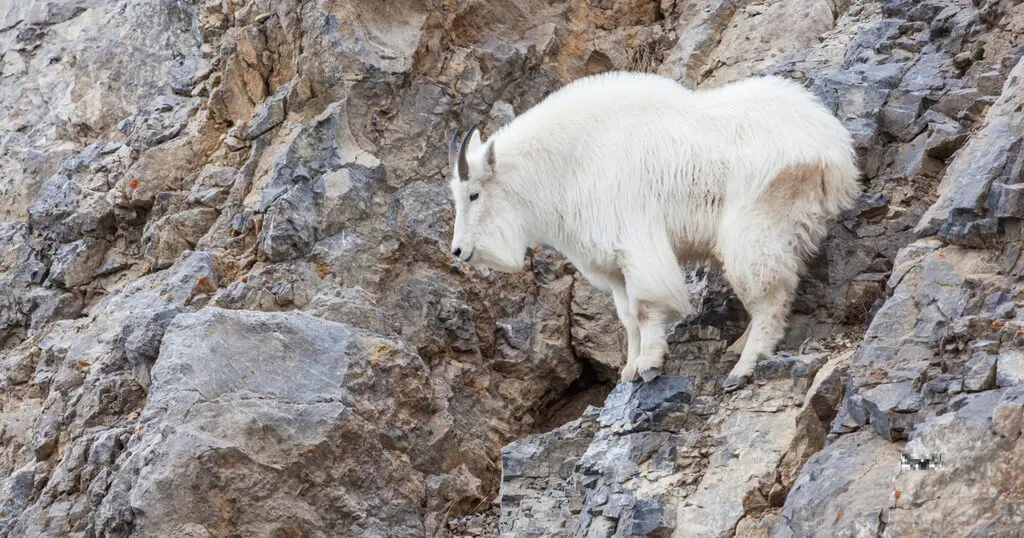
Each hoof has two toes that can spread apart to increase contact with the surface, spread the animal’s weight and keep it balanced.
The edge of the hoof is hard keratin that hooks onto rock edges, while the centre has a soft, rough pad that grips like the sole of a climbing shoe.
The Alaska Department of Fish and Game explains that this structure lets the goat grip even tiny cracks in granite while maximising contact with the surface.
Dewclaws at the back of the foot help stop slipping, and strong shoulder and neck muscles help push the body up steep slopes.
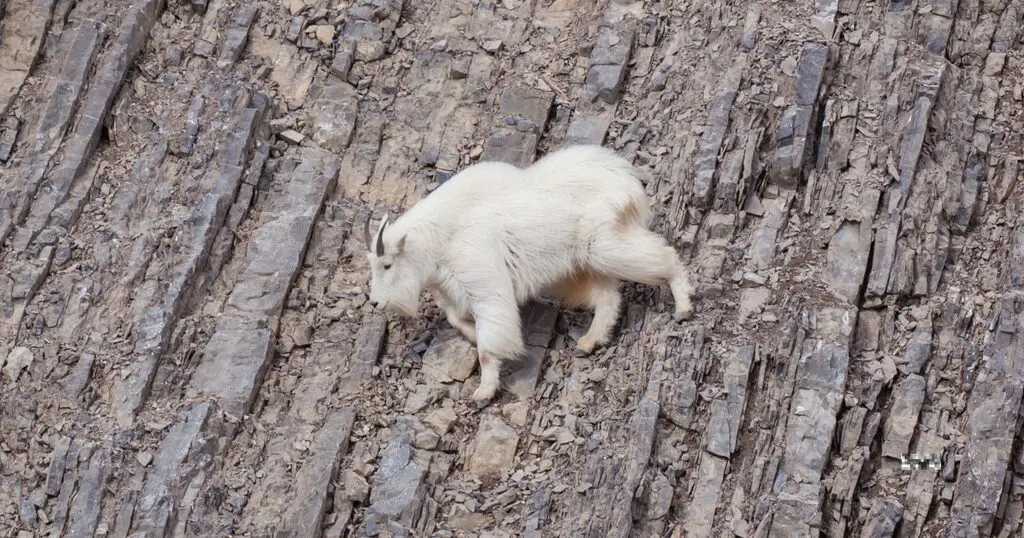
Mountain goats are reported to move easily on slopes steeper than 60 degrees, even close to 90 degrees, and National Geographic says they can leap almost 12 feet, about 3.7 metres, in a single jump.
Cliffs are not obstacles but walls against predators
Mountain goats live in places that look dangerous to other animals not only because there is food, but because cliffs are a defence system.
Their natural predators include wolves, black bears, brown bears, wolverines, lynx and cougars, but most of these find it hard to follow goats up steep cliffs.
So mountain goats avoid low ground unless food runs short, the weather forces them down or they need to travel to mineral licks.
The cougar is one of the most feared predators, strong enough to kill an adult goat and more agile on rocky ground than other large predators.
Kids can fall prey to large birds such as bald eagles and golden eagles. Mothers not only lead their kids up cliffs to escape but also stand below them on steep slopes to stop them falling.
Black horns are not for show, and both sexes have them
Unlike some hoofed animals where only males have horns, both male and female mountain goats have horns.
The horns are black, slender, sharp and curve backwards, about 15–28 cm long. They are not shed each year like deer antlers but keep growing, forming growth rings that can help estimate age.
Females’ horns are about as long as males’ but usually thinner, with tips that curve back more sharply.
In the mating season males fight with their horns for the right to mate, and horn wounds can be serious. Females use their horns just as effectively, especially to protect their young or compete with other females for space and food.
The horns are sharp enough that even predators must be careful. In 2021 a mountain goat in Yoho National Park, Canada, gored and killed a grizzly bear that attacked it.
Grass in summer, whatever it can find in winter
Mountain goats are herbivores, but their diet changes through the year.
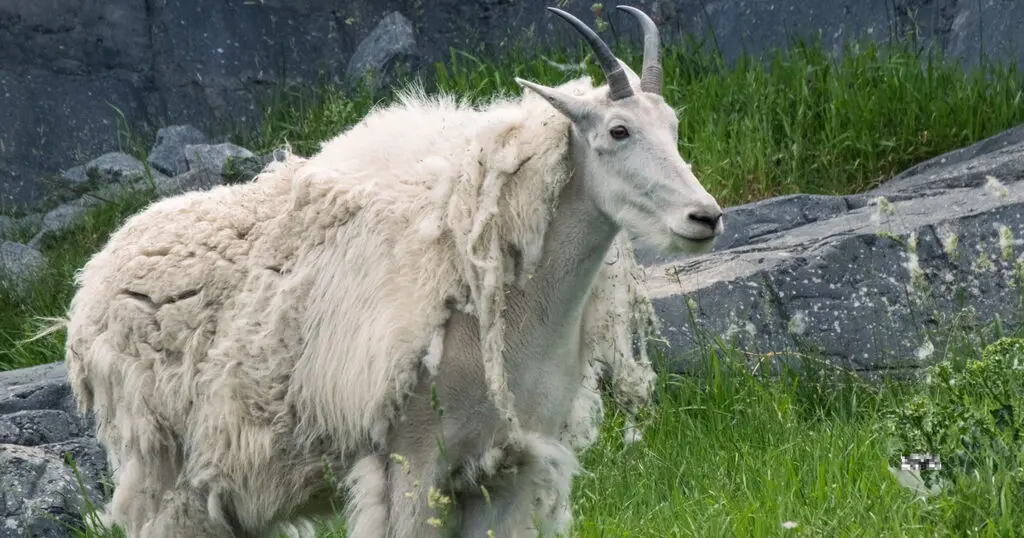
In summer they spend time in alpine meadows eating sedges, herbs and low shrubs. When winter snow covers the high-mountain plants, they switch from grazing to browsing more leaves and twigs.
Winter food may include blueberry bushes, hemlock and lichens, depending on which plants they can still reach above or below the snow.
Overall their diet includes grasses, herbs, sedges, ferns, mosses, lichens and the leaves and twigs of shrubs or low conifers.
In some areas mountain goats travel seasonally to salt licks to lick minerals. The trip may mean coming down from high cliffs, crossing forest or travelling many kilometres to lower ground.
In winter they may have to come down the mountain to survive
Mountain goats may look like the rulers of the world above the treeline, but winter is a big test.
When deep snow buries all the food, some groups move from the alpine zone down to lower elevations near or below the treeline to find food and shelter from the wind.
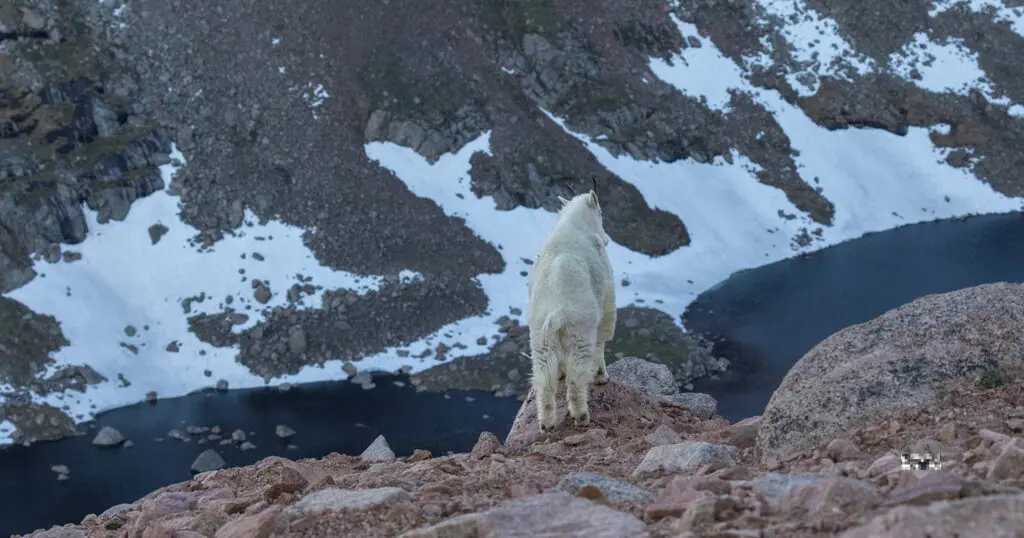
On the coast of Alaska, mountain goats can use low-elevation old-growth forest as winter habitat. Inland populations may stay on windswept ridges where the wind blows the snow away and exposes plants below.
This ability to change altitude with the seasons is vital. Their bodies can handle extreme cold, but if the snow is too deep to find food, staying high may cost more energy than it is worth.
The Alaska Department of Fish and Game says winter snowfall is one of the most important factors in population size, because severe winters can sharply reduce adult survival.
Females live in groups, most males live alone
Males and females live differently.
Females, or nannies, usually live with their kids and young animals in nursery groups that can sometimes be large. Males, or billies, tend to live alone or in small groups of males.
National Geographic says groups of females and young may have about 20 members, and in some areas nursery groups are even bigger.
Males join the females more often in the mating season.
Competition in the herd is not only among males. Females have a clear social hierarchy and fight for food or good spots by lowering their heads and using their horns as weapons.
Aggression between females can sometimes be fiercer than clashes between males, because females compete for food, safe ground and resources for their young.
In the mating season, males travel far to find females
The mating season, or rut, runs from about late October to early December.
Males may travel long distances from their usual range to find females ready to mate. The mating system is usually polygynous: one male can mate with several females.
Males aged about 5–10 years usually father the most young, because they have the size and experience to compete with other males.
Before mating, a male may watch a female for a long time, dig rutting pits in the ground, and compete with rivals through threats or horn clashes.
Their horns look short compared with many hoofed animals, but the slender, sharp tips can cause deep wounds, so fights sometimes end in injury.
Pregnancy lasts about six months, usually with a single kid
After mating, females are pregnant for about 180 days, about six months.
When birth is near, in mid to late May, the female leaves the group and chooses rough terrain or a fairly isolated cliff to give birth, which makes it harder for predators to reach.
Usually one kid is born; twins are fairly rare. A newborn kid weighs a little over 3 kilograms but has no time to be weak: within a few hours it is standing, walking, running and trying to climb after its mother.
National Geographic says kids must be able to stand within minutes of birth, because the mountain environment is open and full of danger.
Mothers with kids then rejoin a nursery group. Kids stay close to their mothers throughout their first year, and some stay with them for several years.
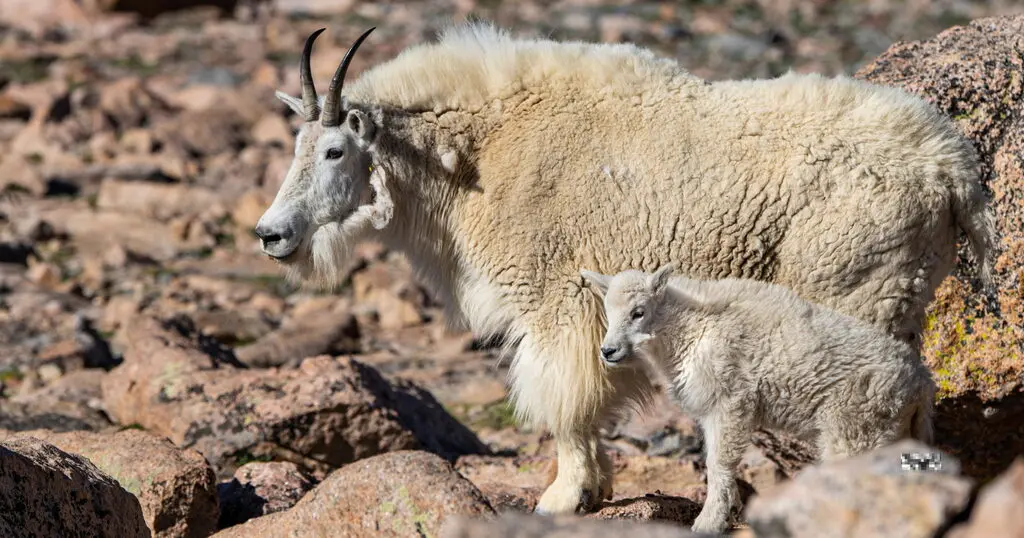
Females usually have their first kid at about three to four years old, fairly late compared with small mammals.
Slow growth and few young mean slow recovery
The way mountain goats breed directly affects their conservation.
Females start breeding late, are pregnant for half a year and usually have one kid at a time. So when a population loses many adults, whether to harsh winters, hunting or disturbance, it takes years to recover.
The Alaska Department of Fish and Game says populations can fall sharply in areas hit by several harsh winters in a row. In the Lynn Canal area, for example, monitoring found the population fell by about 45% over five years with several severe winters.
The survival of adult females is therefore very important. Losing one mother means losing not just one animal but future young for generations.
For this reason, hunting management in Alaska puts special emphasis on limiting the killing of females.
Most live no more than 12 years, but some reach 18
National Geographic says mountain goats live about 9–12 years in the wild. The Alaska Department of Fish and Game says some can live to about 18, but most do not reach 12.
In older animals, one key limit on lifespan is teeth that wear down with age from constantly chewing rough plants, making them less able to chew food.
Before old age, mountain goats face many other dangers: predators, avalanches, harsh winters and falls in the very terrain they rely on for safety.
Data collected in Alaska show avalanches may cause 23–65% of mountain goat deaths in some areas, depending on the terrain and snow conditions.
It is an interesting paradox: the cliffs that protect them from predators are also places where avalanches and severe weather can take their lives.
Most of the world’s mountain goats live in Alaska and British Columbia
Mountain goats are native to the mountains of north-western North America, from the Cascade and Rocky ranges through British Columbia, Alberta and Yukon to south-eastern and south-central Alaska.
The Alaska Department of Fish and Game says most of the world’s mountain goats live in south-eastern Alaska and British Columbia.
Alaska alone is estimated to have about 24,000–33,500 mountain goats, with 13,500–20,000 or more in the south-east of the state.
Outside their native range, people have released mountain goats in places such as Colorado, Utah, Nevada, Oregon, South Dakota and parts of Washington, so there are now populations outside their native range in several states.
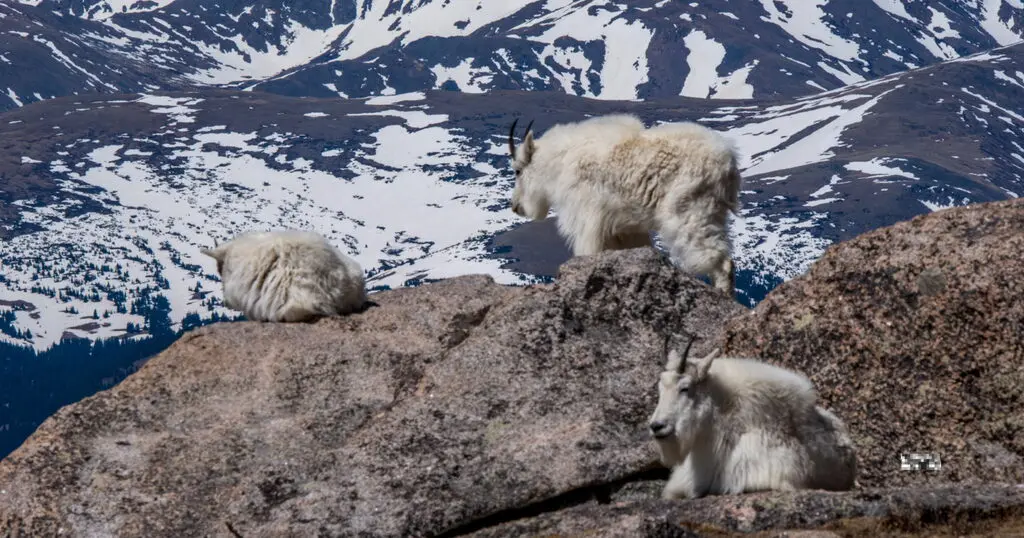
Some releases were very successful. National Geographic says that in Utah, just six goats released in the late 1960s grew to more than 2,000. Authorities have had to move some to other areas when numbers outgrew their habitat.
Low risk overall, but not safe everywhere
The mountain goat is currently listed as Least Concern (LC). The global population is considered fairly stable, but a global assessment does not mean every population is equally healthy.
The Alaska Department of Fish and Game says many populations are small and isolated on separate mountain ranges, making them vulnerable to harsh winters and hunting. Population trends can therefore vary widely by area and year.
Logging in low-elevation forest can reduce important winter habitat, while mining, road building and hydropower projects may disturb or cut off their movement routes.
Another factor that may seem unrelated is helicopters. The Alaska Department of Fish and Game says mountain goats are more sensitive to industrial disturbance than many wild animals, including blasting, helicopter flights, aerial sightseeing and heliskiing.
When frightened animals flee their winter feeding or resting areas, they waste energy at a time when food is already scarce.
Sources: U.S. Fish & Wildlife Service / National Geographic / Alaska Department of Fish and Game