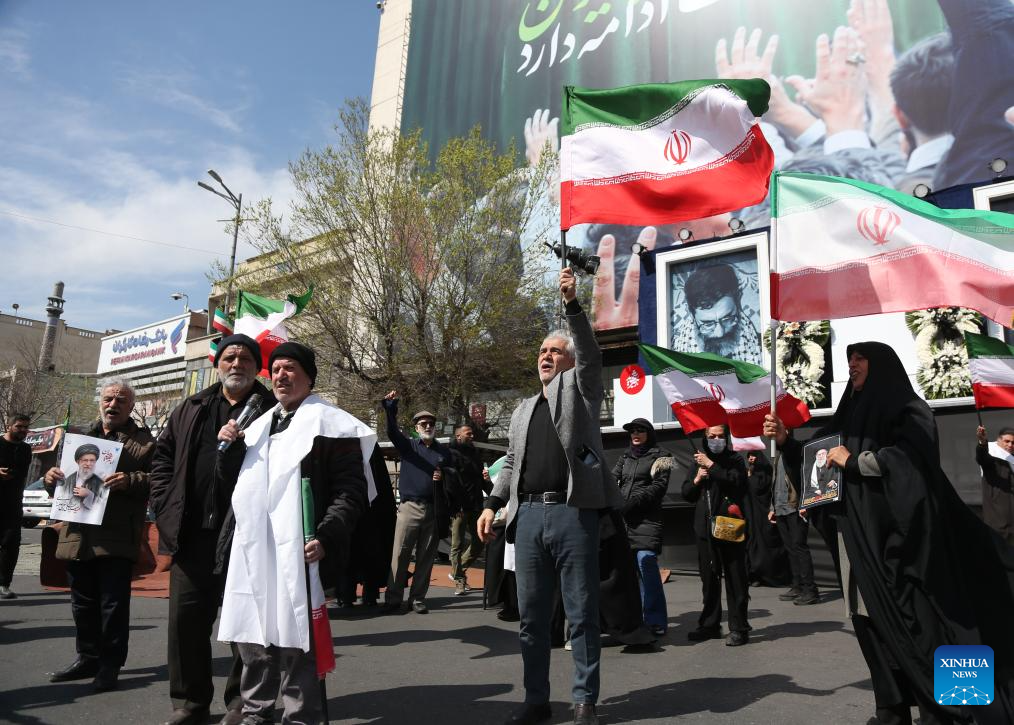


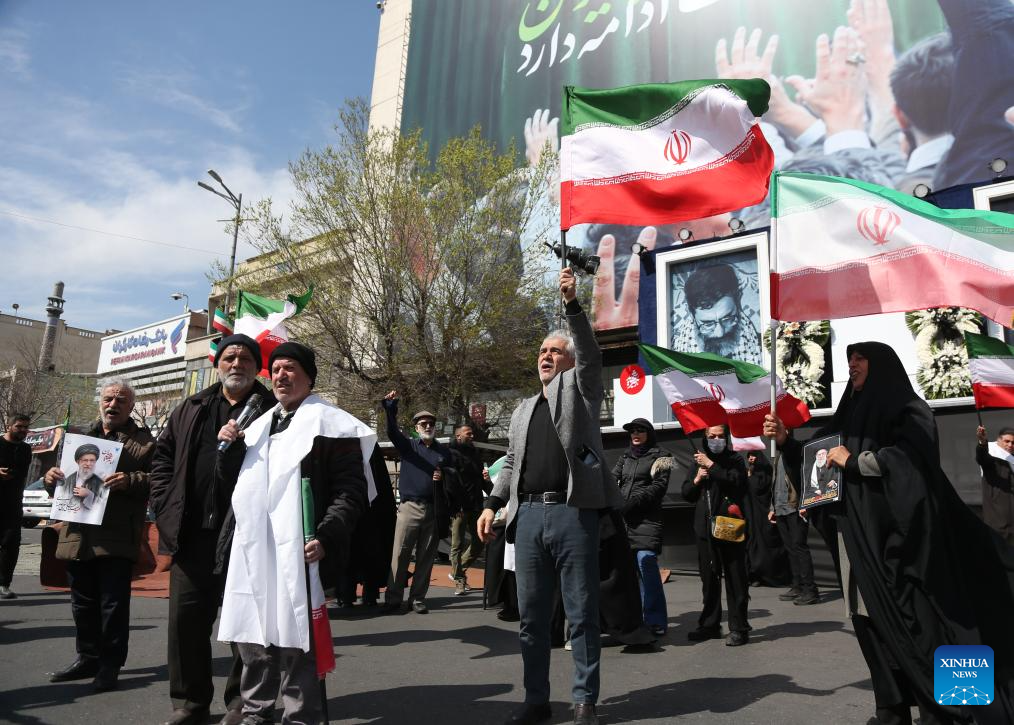
TEHERAN/WASHINGTON/JERUSALEM – A senior cleric and member of Iran’s Assembly of Experts said on Wednesday that the country will select its next supreme leader soon, with candidates determined.
Seyed Ahmad Khatami made the remarks in an interview with state-run IRIB TV four days after Iran’s Supreme Leader Ali Khamenei was killed in a US-Israeli attack on the Iranian capital Teheran.
He stressed that no problem has occurred in the country’s leadership, noting that the interim leadership council, comprising Iran’s President Masoud Pezeshkian, Judiciary Chief Gholamhossein Mohseni-Ejei and Alireza Arafi, a jurist from the country’s Constitutional Council, is running the country.
Iran reports 1,045 deaths
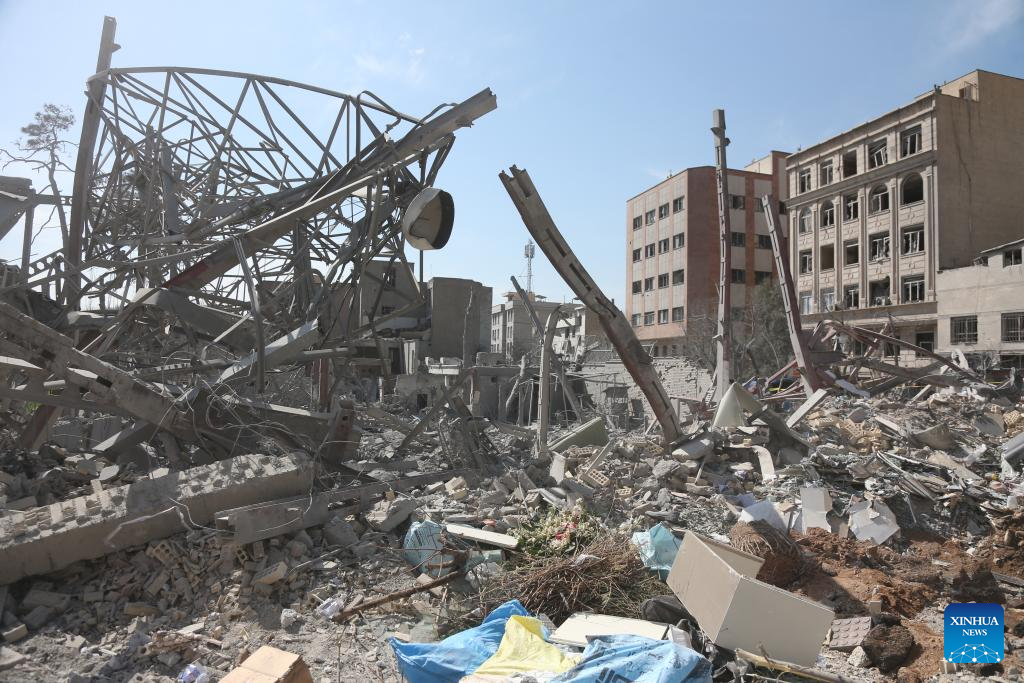
Meanwhile, Iran’s Foundation of Martyrs and Veteran Affairs said 1,045 people have been killed in the country since Saturday as a result of US-Israeli strikes.
In a statement published on its official website, the foundation described the strikes as “aggressive and brutal”.
US to pay ‘heavy price’ for killing supreme leader
Writing on social media platform X, Secretary of Iran’s Supreme National Security Council Ali Larijani said the United States will have to pay a “heavy price” for killing Khamenei.
Larijani said US President Donald Trump dragged the American people into an “unjust” war with Iran.
He added, “Now he must calculate: with over 500 American soldiers killed in just the past few days, does America still come first – or Israel?”
Trump accused of betraying diplomacy
On Wednesday, Iran’s Foreign Minister Seyed Abbas Araghchi accused Trump of betraying both diplomacy and the American people by bombing the negotiating table amid nuclear talks.
“When complex nuclear negotiations are treated like a real estate transaction, and when big lies cloud realities, unrealistic expectations can never be met,” Araghchi said in a post on social media platform X.
“The outcome? Bombing the negotiation table out of spite. Mr. Trump betrayed diplomacy and Americans who elected him,” he added.
‘All Israeli embassies to become legitimate targets’
In reaction to Israel’s recent threat against Iran’s embassy in Lebanon, Abolfazl Shekarchi, a spokesman for Iran’s armed forces, warned that if Israel attacks Iran’s embassy in Lebanon, all its embassies will become legitimate targets, according to the semi-official Tasnim news agency.
Shekarchi stressed, “If Israel commits such a crime and targets Iran’s embassy in Lebanon, it will force us to consider all Israeli embassies across the world as legitimate targets, and we will definitely take countermeasures.”
‘Complete and total dominance’ over Iranian airspace soon
In another development, White House Press Secretary Karoline Leavitt said that US forces will have “complete and total dominance” over Iranian airspace in the next few hours.
“We expect to have complete and total dominance over Iranian airspace in the coming hours,” Leavitt said at the White House daily press briefing.
She added that deploying US ground troops to Iran is not currently planned, though Trump said earlier he is open to the option in the future.
Israel’s new airstrikes in Teheran
Meanwhile, the Israeli military said on Wednesday night it launched another wave of airstrikes in Teheran, targeting Iranian military sites.
The Israel Defense Forces (IDF) said in a statement that for the 11th wave of strikes and the second time on Wednesday, the IDF attacked Iran’s military infrastructure throughout Teheran.
Earlier in the day, the IDF said it carried out large-scale airstrikes in eastern Teheran, targeting facilities used as headquarters for the Islamic Revolutionary Guard Corps (IRGC), the elite Quds Force, the Intelligence Directorate, the Basij volunteer force affiliated with the IRGC, internal security units, and the cyber warfare.
Iranian fighter jet over Teheran shot down
The IDF also said its air force shot down an Iranian fighter jet over Teheran.
The Israeli military described the downing of the Iranian YAK-130 as a “historic first”, marking the first time a fighter jet of this specific type has been shot down in combat anywhere in the world.
The last time the Israeli air force shot down another enemy fighter jet was back in 1985, when an Israeli F-15 jet shot down two Syrian MiG-23s during an air battle over Lebanon, according to Israel’s state-owned Kan TV News.
Compound headquarters of Iran’s security bodies hit
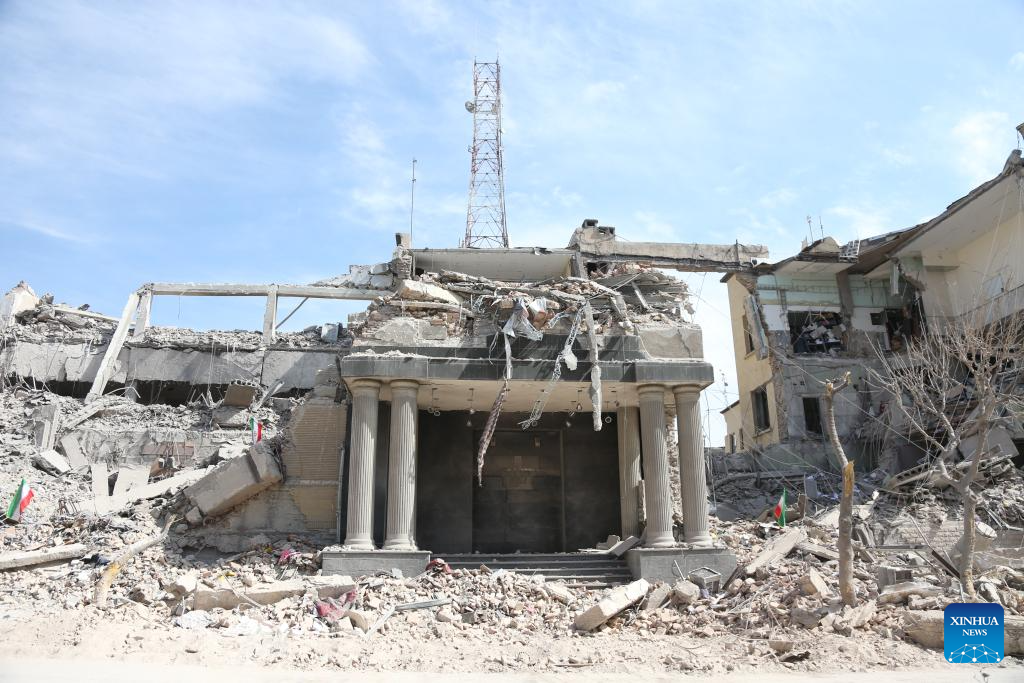
Also on Wednesday, the Israeli military said it carried out large-scale airstrikes in eastern Teheran, targeting a sprawling military compound that houses multiple command centers for Iran’s security and intelligence organizations.
The military said in a statement that the operation was directed at facilities used as headquarters for the IRGC, the elite Quds Force, the Intelligence Directorate, the Basij volunteer force affiliated with the IRGC, internal security units, and the cyber warfare.
Iranian personnel responsible for operating the facility were also targeted, it said.
Over 5,000 bombs on Iran dropped
The IDF also said it is “continuing to deepen” its attacks across Iran, revealing that it has dropped more than 5,000 munitions on the country.
The airstrikes now focus mainly on government targets in Teheran, according to the military.
Israel to ease wartime curbs
Meanwhile, Israel announced that it will ease wartime restrictions starting Thursday, rolling back measures imposed at the start of its military operations against Iran.
The Home Front Command stated it is lowering the level of restrictions from “essential activity level” to a “limited activity level” in all areas of the country, noting the move was made “in accordance with a situational assessment.”
Under the updated guidelines, the limit on public gatherings will increase from 20 to 50 people, provided they take place in venues near a shelter. Educational activities remain prohibited.
‘Iran’s missile launches declined sharply’
Separately, US Chairman of the Joint Chiefs of Staff Dan Caine said at a Pentagon briefing that Iran’s missile launches have declined sharply since the United States and Israel launched massive strikes.
“Iran’s theater ballistic missile shots fired are down 86 percent from the first day of fighting” as of Wednesday morning, said Caine, adding that there’s “a 23 percent decrease just in the last 24 hours”.
“And their one-way attack drone shots are down 73 percent,” Caine said, adding the United States will start “striking progressively deeper into Iranian territory.”