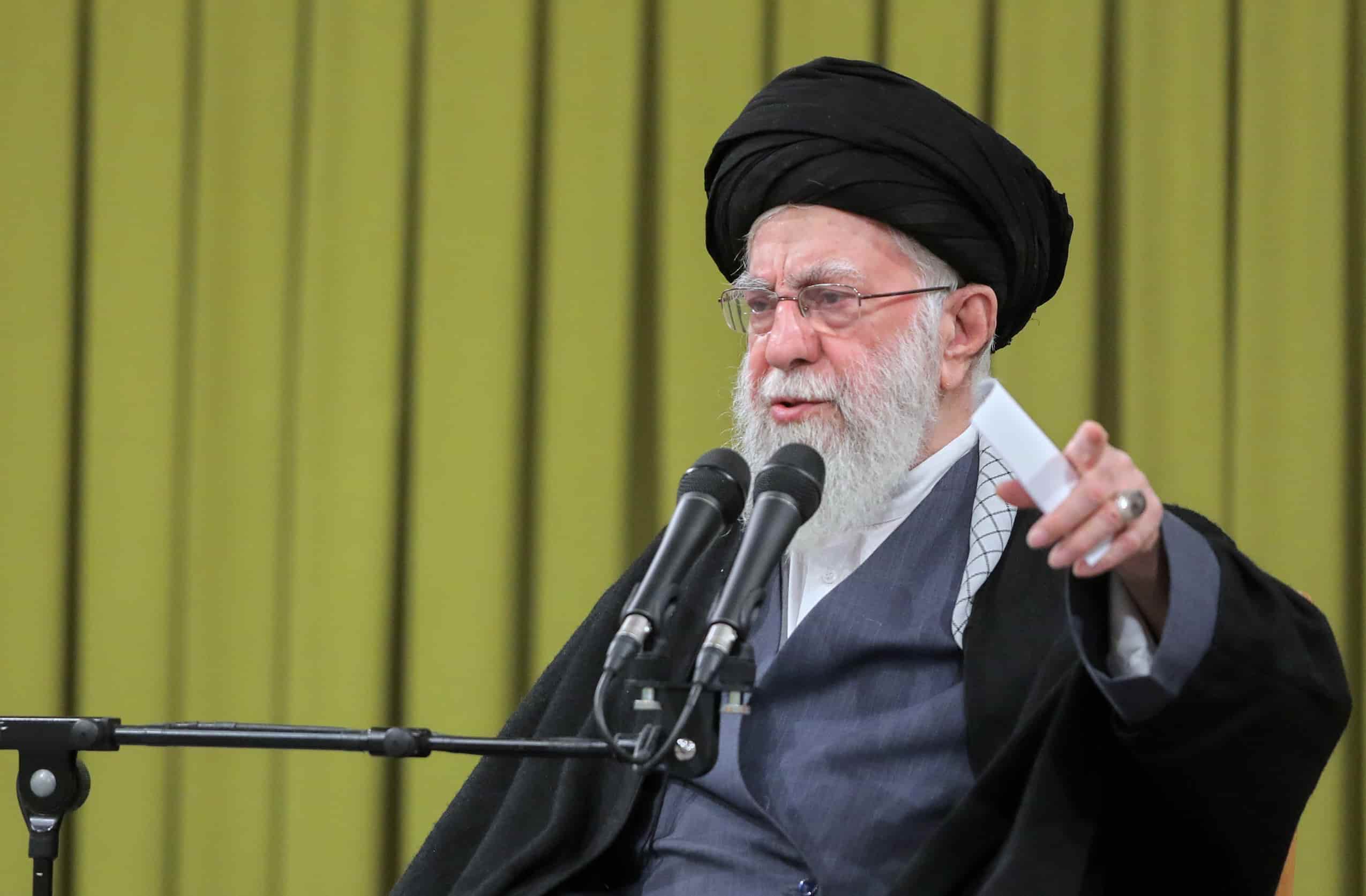


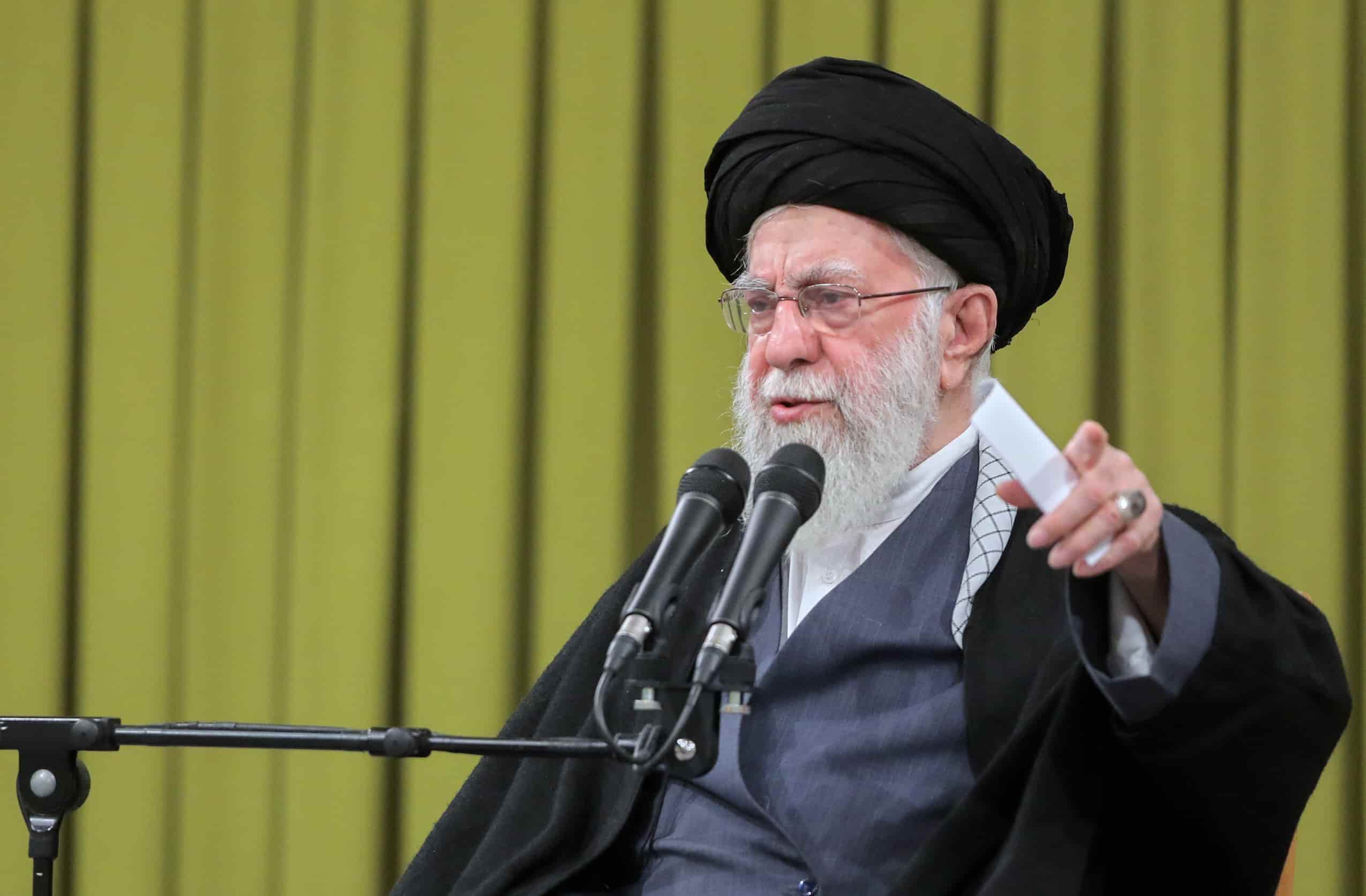
TEHERAN/JERUSALEM — Iranian Supreme Leader Ali Khamenei said on Sunday that if the United States starts a war against Iran, it will be regional.
He made the remarks at a meeting in Teheran as tensions remain high between Teheran and Washington following the latter’s military buildup in the West Asia region, reported the semi-official Fars news agency.
Khamenei said that Iran would not start a war and does not seek to attack any country, “but Iranian people will deliver a hard punch to those seeking to attack and harass them.”
“The American should know that if a war is launched, this time, it will be a regional war,” he emphasized.
US President Donald Trump has said that a “massive armada,” led by the aircraft carrier Abraham Lincoln, is heading towards Iran, warning that “time is running out” for Teheran to reach a deal with the United States.
In response, Iran’s foreign minister said, “Our brave armed Forces are prepared … to immediately and powerfully respond to any aggression.”
Separately, Ali Shamkhani, senior advisor to Iran’s top leader, said on Wednesday that any US military action “from any source and at any level will be considered the start of a war, and its response will be immediate, all-out and unprecedented.”
He added Iran’s response would target “the aggressor, the heart of Tel Aviv, and all of the aggressor’s supporters.”
Qatari PM visits Teheran
Qatari Prime Minister and Foreign Minister Sheikh Mohammed bin Abdulrahman bin Jassim Al-Thani visited Iran on Saturday to discuss regional peace and stability, Iranian Foreign Ministry spokesman Esmaeil Baghaei said Sunday.
Iranian Foreign Minister Seyed Abbas Araghchi and Secretary of the Supreme National Security Council of Iran Ali Larijani met with the Qatari minister, Baghaei told reporters in a press conference.
The meetings were “in continuation of the good offices offered by and consultations among the region’s countries regarding regional developments, and aimed at exchanging views on protecting peace and stability in the region,” Baghaei said.
The top Qatari diplomat reiterated his country’s “support for all efforts aimed at reducing tensions and achieving peaceful solutions that enhance security and stability in the region,” Qatar’s Foreign Ministry said in a statement.
“He also stressed the need for concerted efforts to spare the peoples of the region the consequences of escalation and to continue coordination with brotherly and friendly countries to address differences through diplomatic means,” it added.
On Saturday night, Larijani said in a post on social media platform X that “the formation of a structure for negotiations (with the United States) is progressing,” but did not provide further details.
The developments came amid rising tensions between Iran and the United States, with the latter bolstering its military presence in the Middle East, although publicly holding out the possibility of diplomacy.
Teheran has said it prefers diplomacy to war, but will respond decisively to any act of aggression.
Also on Monday, Baghaei strongly condemned recent Israeli airstrikes in Lebanon, particularly those targeting the country’s southern region.
Israel’s “military aggressions” against Lebanon were in “flagrant violation” of the United Nations Charter’s fundamental principles and “clear instances of war crimes,” he said.
Israeli security chiefs meet with Iran
Israeli Defense Minister Israel Katz held a meeting with military chief Eyal Zamir on Sunday to assess the military’s “operational readiness” following the latter’s urgent defense talks in Washington.
The discussions focused on the military’s “operational readiness for any possible scenario” amid escalating regional tensions, the Defense Ministry said in a statement.
The meeting comes after Zamir concluded a weekend visit to the United States, where he discussed coordination of defense strategies with US Chairman of the Joint Chiefs of Staff Dan Caine and senior Pentagon officials. The talks reportedly centered on preparing for potential US military action against Iran.
The flurry of high-level meetings follows a similar trip to Washington last week by Israel’s military intelligence chief, Shlomi Binder, as the two countries step up contingency planning for a possible regional confrontation.
Teheran has threatened it will retaliate with attacks on US bases and Israeli targets in case of a US attack on Iran.