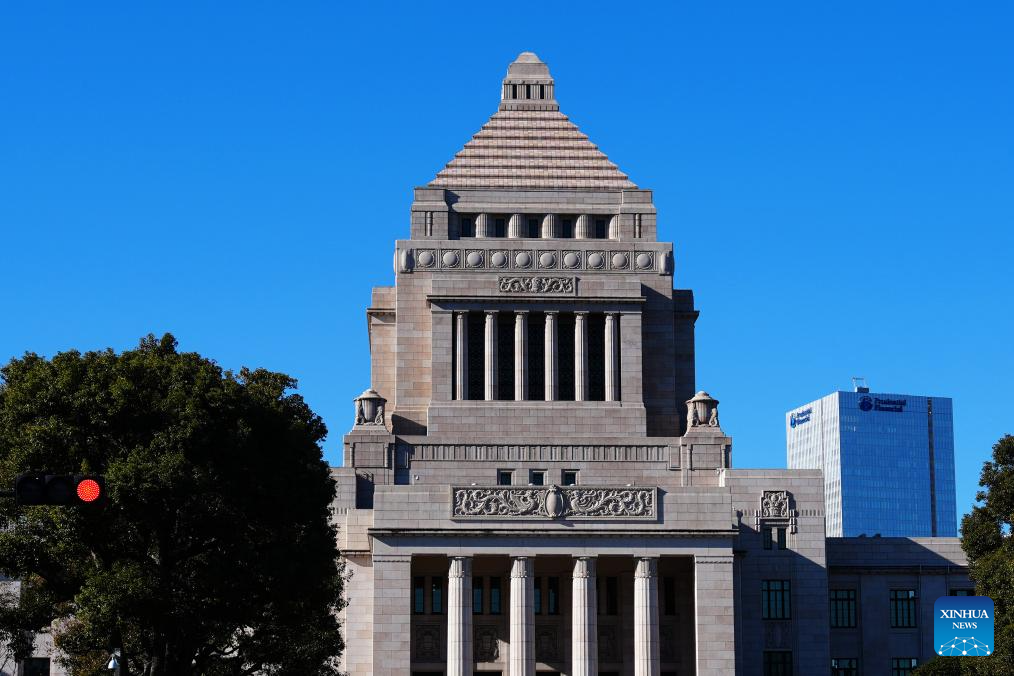


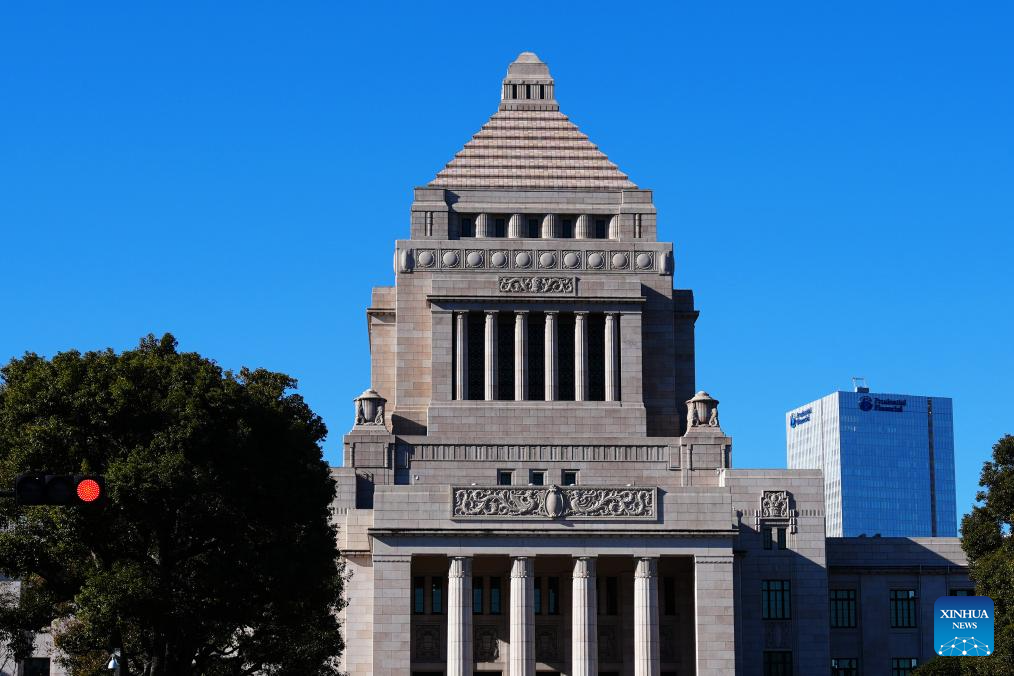
TOKYO — on Friday dissolved the House of Representatives, marking the first time in 60 years that the lower house has been dissolved on the opening day of an ordinary parliamentary session and paving the way for a Feb 8 snap election.
Public opinion holds that Takaichi’s “surprise” move to dissolve the lower house and call an early general election amounts to a high-stakes political gamble taken amid three major governing crises, which have triggered new political realignments, including a coalition of center-left opposition forces. The upcoming contest could reshape Japan’s political landscape and even exert a long-term influence on the country’s political trajectory.
Three major crises
is scheduled for Feb 8. With more than two years left in the current lower house term, Takaichi has justified her decision to call a snap election by arguing she has yet to receive public backing for her premiership that began in October 2025 and the new ruling coalition of her Liberal Democratic Party (LDP) and the Japan Innovation Party (JIP) formed the same month, adding that if the ruling camp secured a majority, she would push ahead “decisively” with “bold” policies.
Japanese public opinion believes that the real reason behind Takaichi’s lower house dissolution on the very first day of the Diet session lies in her assessment that prospects for governance would deteriorate once parliamentary deliberations began. At present, Takaichi faces three major crises.
First, Takaichi’s governing base is fragile. Her ruling coalition holds only a slim majority in the powerful House of Representatives and remains a minority in the House of Councillors. The LDP and its coalition partner JIP harbor divergent interests, while within the LDP, Takaichi is constrained by factions linked to former Prime Minister Taro Aso and the former Abe faction.
Second, personal scandals continue to emerge. Takaichi herself has been reported to have ties with controversial religious groups, while she and several senior government officials and local lawmakers of the JIP have been implicated in political funding issues. These matters could become key targets for opposition attacks during Diet debates.
Third, economic challenges remain unresolved. Takaichi has sought to address high inflation through expanded government spending, but results have been limited. Instead, government bond yields have risen, and the yen has continued to depreciate, casting doubt on near-term economic prospects. Moreover, experts believe that the economic backlash from Takaichi’s series of recent diplomatic missteps may become more evident in the coming months.
Against this backdrop, Japanese media and analysts argue that Takaichi aims to make a last-ditch effort by converting her personal approval ratings into parliamentary seats, thereby achieving two objectives: gaining greater leverage within the ruling coalition and the LDP, and countering opposition criticism by claiming “having received a mandate from the people.”
Two political gambles
Takaichi has said that her goal in the election is for the ruling coalition to secure a majority in the House of Representatives, adding that she has staked her position as prime minister on the outcome. Observers believe her true objective is for the LDP alone to win a majority, a goal that, according to a recent Yomiuri Shimbun poll, is not beyond reach.
The suddenness of the dissolution itself constitutes one of Takaichi’s major gambles. Media first reported on Jan 9 that she was considering dissolving the lower chamber, and she formally expressed the intention on Jan 14. The period between dissolution and the voting day is just 16 days, the shortest in Japan’s postwar history. While the “surprise” move and “short, decisive battle” have caught all parties off guard, the LDP, as the largest nationwide party, enjoys advantages in candidate recruitment and organization. Opposition parties, by contrast, face greater difficulties in fielding candidates.
However, dissolving the lower house at this juncture has disrupted deliberations on the new fiscal year budget and contradicted Takaichi’s earlier pledge to prioritize policy over political maneuvering. Media outlets and opposition parties have slammed the move as disregarding the economy and people’s livelihoods in favor of partisan or personal interests, potentially eroding public support.
Another gamble lies in Takaichi’s reliance on her personal approval ratings. Analysts caution that individual popularity does not necessarily translate into party support. In 2024, then-Prime Minister Shigeru Ishiba sought an early election while enjoying a degree of personal popularity, only to see the LDP lose its majority in the House of Representatives.
The LDP has also yet to fully resolve the fallout from its slush fund scandal, which contributed to past electoral setbacks. In the 2025 House of Councillors election, the party faced strong criticism for backing candidates implicated in the scandal, a key factor in its defeat. Takaichi has lifted restrictions on such candidates in the upcoming election, a move that could again provoke voter dissatisfaction.
Political realignment
In response to the “surprise” dissolution, the main opposition Constitutional Democratic Party of Japan (CDPJ) has joined forces with Komeito, a former ally of the LDP, to form a new party named the Centrist Reform Alliance (CRA) to challenge Takaichi’s ruling bloc. The opposition has traditionally been fragmented, but this alliance could significantly alter the electoral landscape, Asahi Shimbun reported.
Komeito has previously played a crucial role in supporting LDP candidates. Analyses suggest that in the 2024 general election, as many as 52 LDP candidates might have lost without Komeito’s backing. Now, with Komeito mobilizing support for candidates from the opposition camp, LDP contenders may face serious challenges.
Hiroshi Shiratori, a professor at Hosei University in Tokyo, said the CRA could secure a seat tally comparable to the LDP’s, potentially creating a balance of power between the major ruling and opposition parties.
The formation of the new party has fueled speculation about broader political realignment. The Yomiuri Shimbun asked whether the CRA could become a catalyst for restructuring Japan’s political order. Shiratori argued that the very emergence of the new party already signals that such a realignment is underway.
At a deeper level, analysts see implications for Japan’s political direction. Unlike the right-leaning LDP and JIP, the CDPJ-Komeito alliance adopts center-left policy orientations. Atsushi Koketsu, emeritus professor at Yamaguchi University in Japan, said their cooperation could help consolidate “middle forces” in Japanese politics. If the new party gains sufficient support in the election, a centrist path may take root.
Koketsu added that competition between the right and the center-left may become a defining feature of Japanese politics, while far-right forces such as the Sanseito party, which have risen rapidly in recent years, could also expand through the election. In the long run, political volatility and uncertainty in Japan are likely to increase.