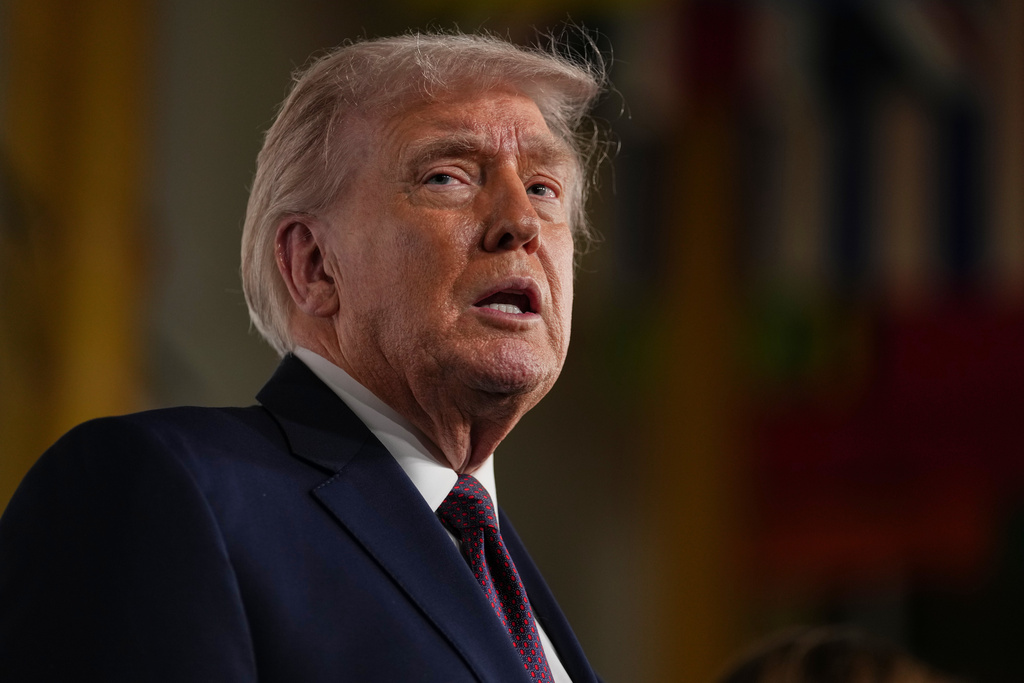


WASHINGTON/TEHERAN/MOSCOW – US President Donald Trump said on Thursday that he has had conversations with Iranian leaders and plans to continue discussions.
“I have had and I am planning on it,” Trump said when asked if he had any conversations with Iran in the last few days. But he did not specify whom he had spoken with.
“We have a lot of very big, very powerful ships sailing to Iran right now, and it would be great if we didn’t have to use them,” he said.
“I told them two things,” he said. “Number one, no nuclear. And number two, stop killing protesters.”
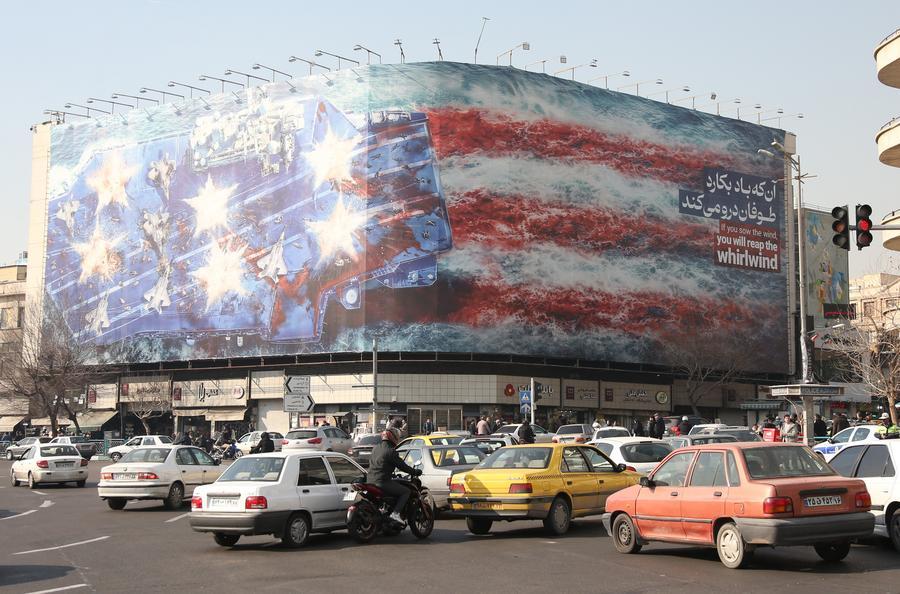
The latest developments followed a US deployment of a carrier-led strike group to the Middle East earlier this week. Trump warned Wednesday that a “massive armada” was heading toward Iran and that “time is running out” for Teheran to reach a deal.
Iran issued a series of warnings on Thursday regarding potential US military action and has started ramping up its military preparedness for possible conflict.
Earlier in the day, Iran announced it has inducted 1,000 domestically developed “strategic combat” drones into its army divisions, according to the semi-official Tasnim news agency. The drones were distributed to ground, air defense, naval, and air forces under the order of Army Chief Amir Hatami, and are capable of striking fixed or mobile targets on land, at sea, and in the air.
The army has prioritized preserving strategic advantages to deliver a “crushing” response to any aggression, Hatami was quoted as saying.
The country also announced that the Islamic Revolution Guards Corps (IRGC) would hold “live-fire” exercises on Sunday and Monday in the Strait of Hormuz, “a chokepoint for the flow of 20 percent of the world’s oil and natural gas”, according to Press TV.
EU’s designation of IRGC as terrorist
Also on Thursday, foreign ministers of the European Union agreed to add the IRGC to the bloc’s terrorist list.
Denouncing the EU’s move, the General Staff of the Iranian Armed Forces warned that the European policymakers would be directly responsible for their move’s “precarious” repercussions, according to the official news agency IRNA.
In the wake of US “escalatory and destabilizing” actions, Iranian President Masoud Pezeshkian on Thursday exchanged views with Qatar’s emir and Pakistani prime minister on the latest regional developments.
In two separate phone calls with Qatar’s Emir Sheikh Tamim bin Hamad Al Thani and Pakistan Prime Minister Shehbaz Sharif, Pezeshkian called for greater unity among Muslim states and continuing the path of diplomacy to de-escalate tensions, according to a statement from his office.
Iran’s Foreign Minister Seyed Abbas Araghchi is scheduled to visit Turkiye on Friday for high-level talks aimed at strengthening regional ties based on “good-neighborliness”. Despite the heightened tensions, Araghchi expressed Iran’s openness to a “mutually beneficial, fair and equitable” nuclear agreement reached on equal footing.
Meanwhile, Israel has heightened its military alert. “If the Iranians draw us into an incident, they will discover they have made a serious mistake,” a senior security official was quoted as saying by Israel’s Ma’ariv news site on Thursday.
‘Military action may cause chaos’
In Russia, Kremlin spokesman Dmitry Peskov said military actions against Iran could create chaos and destabilize security systems across the entire Middle East region.
“Any forceful actions can only create chaos in the region and lead to very dangerous consequences in terms of destabilizing security systems throughout the region,” Peskov told reporters.
He called on all parties to exercise restraint and abandon the use of force to resolve the issue, as diplomatic and negotiating options have not been exhausted.
Names of unrest victims
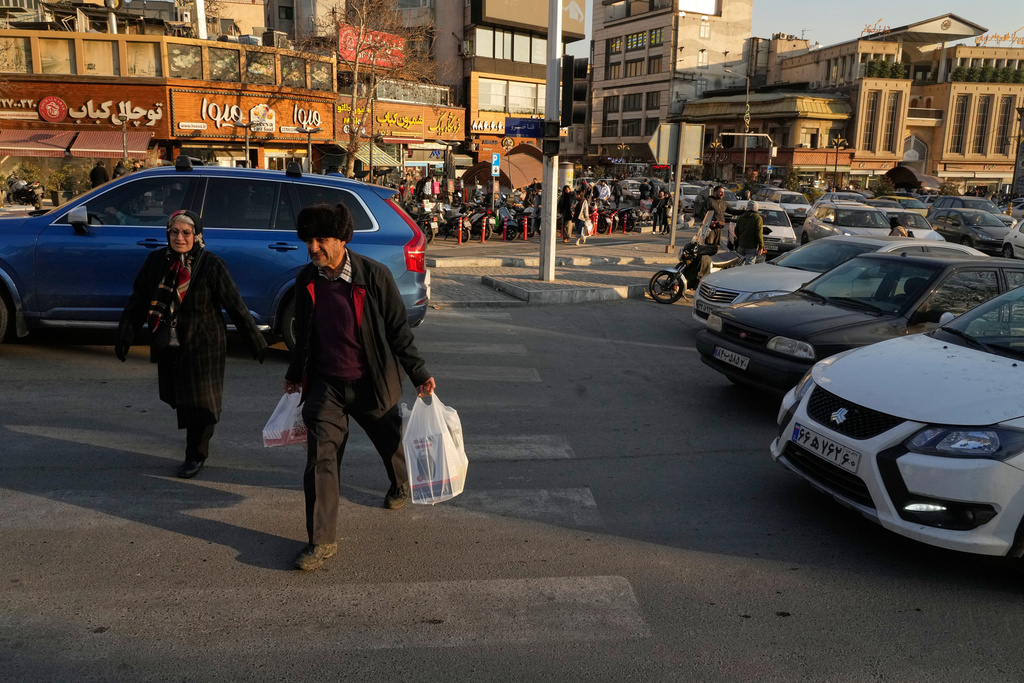
Separately, Pezeshkian, the Iranian president, has ordered the public release of the names of all those killed in recent unrest and called for an accelerated release of detainees, his office said on Wednesday evening.
A system is being set up to verify information about the victims in a “clear response” to false reports and fabricated statistics, Seyyed Mehdi Tabatabaei, deputy for communications at the president’s office, wrote on social media platform X.
The Iranian government has reported 3,117 deaths during the unrest. The US-based Human Rights Activists News Agency has reported at least 6,000, though that figure could not be independently verified.
During a cabinet meeting on Wednesday, Pezeshkian also instructed Justice Minister Amin-Hossein Rahimi to work with the judiciary to speed up the release of those detained during the unrest, according to a statement on the president’s website.