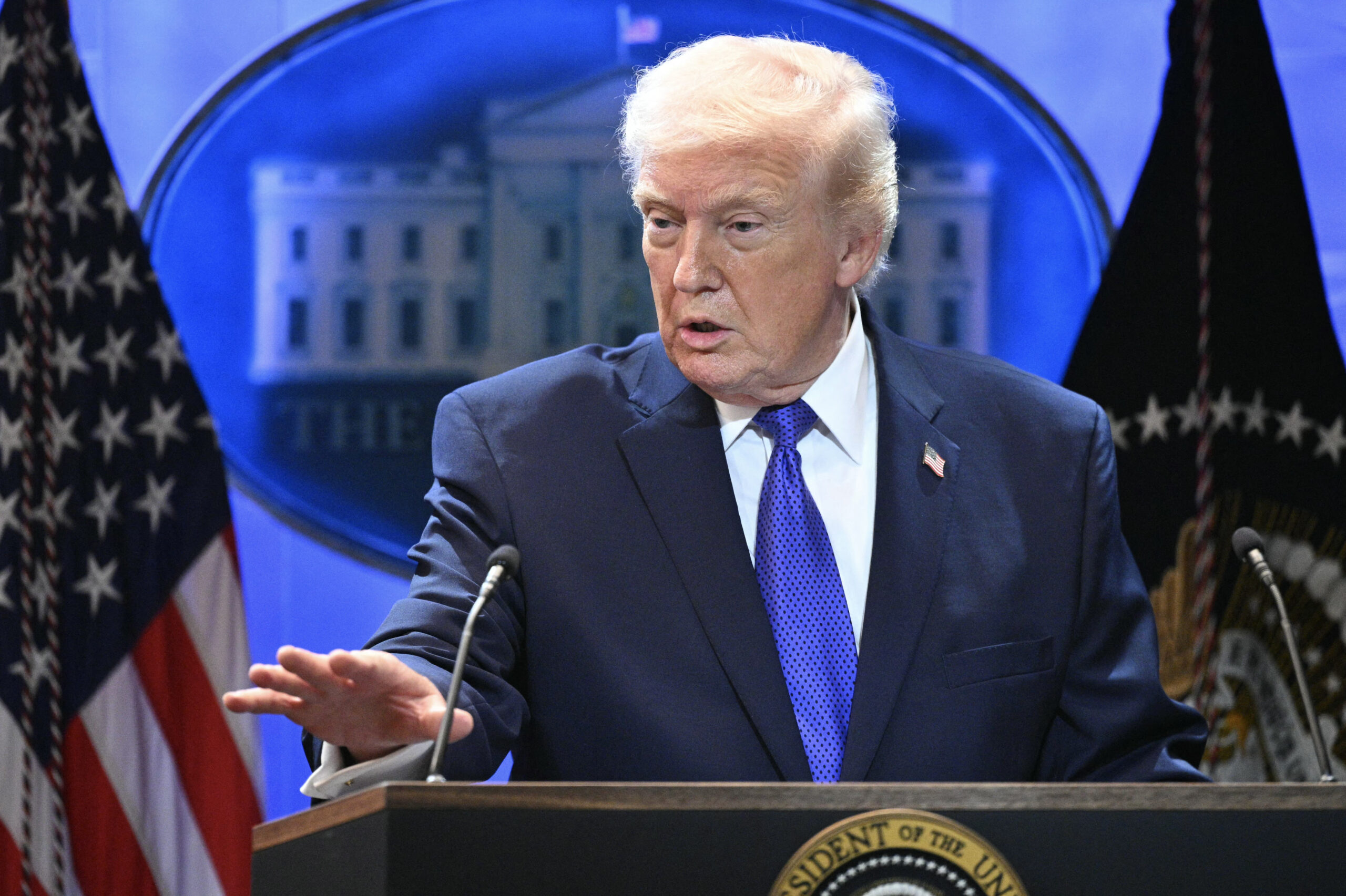


President Donald Trump signed an executive order Friday imposing a 10 percent global tariff on foreign goods, moving quickly to preserve his trade agenda after the US Supreme Court struck down many of the levies he imposed last year.
“It is my Great Honor to have just signed, from the Oval Office, a Global 10% Tariff on all Countries, which will be effective almost immediately. Thank you for your attention to this matter!” Trump wrote in a social media post.
The tariff is set to take effect Feb 24 at 12:01 am Washington time, according to a fact sheet released by the White House.
Trump is implementing the new baseline duty under Section 122 of the Trade Act of 1974, which grants the president unilateral ability to impose tariffs. But the untested legal provision puts a 150-day limit on how long the duties can remain in place.
Congress would need to approve any extension, a complication for the president as Democrats and some Republicans have resisted parts of his tariff agenda.
The Supreme Court, in a 6-3 decision handed down earlier Friday, ruled that Trump’s use of a decades-old federal emergency-powers law to impose his so-called “reciprocal” tariffs was unlawful. Trump invoked the International Emergency Economic Powers Act last April to impose duties on dozens of US trading partners, ranging from 10 percent to 50 percent.
The justices invalidated those tariffs along with duties on goods that Trump imposed in the name of addressing fentanyl trafficking. The ruling also casts doubt on separate IEEPA tariffs placed on goods from Brazil and India.
Along with the flat 10 percent rate, Trump said he would keep in place existing import taxes under Section 301 and Section 232 and signaled plans to launch more trade investigations. Trump directed the Office of the US Trade Representative to begin probes under its Section 301 authority, according to the fact sheet.
Section 301 tariffs require country-specific inquiries that include hearings and an opportunity for input from affected companies or nations. Officials would have to conclude the country has violated a trade agreement or engaged in practices that burden US trade in order to impose the tariffs.
The president earlier on Friday suggested that those investigations could be carried out while the 10 percent baseline was in place, and eventually replace the flat rate — though he declined to rule out whether he might also seek an extension of the Section 122 levies. Trump said he was considering tariffs on foreign cars ranging from 15 percent to 30 percent.
The president’s plan to impose a 10 percent global duty could lift the average US effective tariff rate to 16.5 percent from 13.6 percent, or lower it to 11.4 percent if current exemptions are maintained, Bloomberg Economics estimated.
US Trade Representative Jamieson Greer, when asked about existing exemptions, said the White House was seeking “continuity” with the new order, which will take effect on the day that Trump is to deliver his State of the Union speech to Congress.
Among those exemptions, which will remain exempt from the new 10 percent tariff, are goods compliant with the existing USMCA trade deal between the US, Canada and Mexico. The order also preserves exemptions for some agricultural goods in keeping with the previous, invalidated levies.
The Supreme Court decision raises fresh questions about revenue that already has been collected on tariffs. More than 1,500 companies had filed tariff lawsuits in trade court in preparation for the ruling, according to a Bloomberg analysis.
The justices did not broach whether importers are entitled to refunds, leaving it to a lower court to weigh in. Trump criticized the Supreme Court for not providing guidance on how refunds should be handled. “It’s not discussed. We’ll end up being in court for the next five years,” Trump lamented during a White House press conference.
Refunds could total as much as $170 billion — more than half the total revenue Trump’s tariffs have brought in. Still, Treasury Secretary Scott Bessent said that revenue collected from tariffs will be “virtually unchanged in 2026,” despite the legal decision.
“Treasury’s estimates show that the use of Section 122 authority, combined with potentially enhanced Section 232 and Section 301 tariffs will result in virtually unchanged tariff revenue in 2026,” he told the Economic Club of Dallas on Friday.