 US dollar
 Thai baht
 Chinese yuan




Laos-China 500 kV Power Project Boosts Energy Security
The Lao-China 500 kV power transmission project serves as a key foundational backbone for Laos to become a regional clean energy hub.
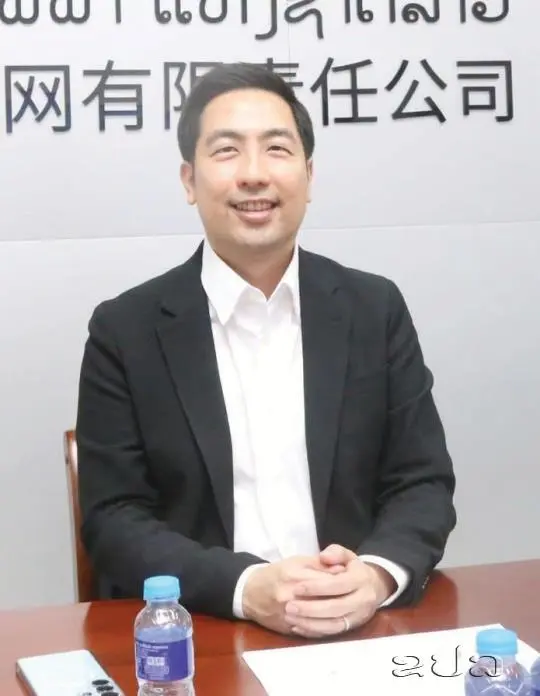
Soulivanh Thammavong, Deputy Managing Director of Electricite du Laos Transmission Company Limited (EDL-T), said in an interview on November 10, 2026, that the Laos-China 500 kV power grid interconnection project is the first backbone connection laying the foundation for the Lao PDR to step toward becoming a regional clean energy hub and transforming green clean energy into capital to create a new driving force for the national economy along with sustainable regional growth.
Previously, the Lao PDR had massive potential for generating electricity from hydropower but still faced limitations in the power transmission system, causing surplus electricity in the rainy season at times (during the rainy season, electricity generation exceeds demand, but up to 800 million kilowatt-hours have to be released and wasted due to a lack of export channels), while facing shortages in the dry season. Having a 500 kV transmission system is therefore an important mechanism to solve this problem. Since April 20, 2026, the project has been able to upgrade electricity transmission capacity from 50 MW to 1,500 MW, or an increase of 30 times, and open up opportunities to export clean energy of up to 3 billion kilowatt-hours per year. The highlight of the project is the creation of a two-way electricity trading system, whereby surplus electricity can be exported in the rainy season to generate foreign currency revenue. Meanwhile, in the dry season, electricity can be imported from China to help supplement domestic demand to ensure electricity supply for people, factories, hospitals, and schools.
Soulivanh Thammavong also highlighted actual export and revenue figures, which include electricity volume from the Nam Ou 5, 6, and 7 dams of approximately 600 million kWh transmitted directly to China’s Greater Bay Area, including Guangdong, Hong Kong, and Macau; solar energy is expected to reach cross-border exports of up to 1.1 billion kWh per year. In addition, there is another 1,000 MW mountainous solar farm project under preparation for development.
Regarding human resource development, EDL-T has cooperated with EDL to conduct 7 batches of Lao-China transmission line and substation technician training projects, with 84 trainees completing the training. In addition, there has been training on management, maintenance, and drone technology more than 80 times, with more than 2,000 participants. Furthermore, a 2+2+2 young engineer training model has been applied, consisting of 2 months of Chinese language study, 2 months of theory and practice, and 2 months of on-site work, which has developed 171 local technical core personnel. Meanwhile, during the period 2010-2026, scholarships were also awarded to 81 Lao students to study in China, among whom 53 have graduated.

Regarding environmental protection, the project has attached importance to reducing impacts on forests and communities by adjusting the transmission line corridor and using high-tower techniques to reduce tree cutting, successfully preserving 170.4 hectares of forest area and reducing the width of the tree cutting corridor from 70 meters to about 22 meters, while also conducting unexploded ordnance (UXO) clearance along the transmission line to ensure safety in construction and local communities. At the same time, the project has also created jobs for local labor, improved schools, built reading rooms, and awarded scholarships to Lao students and pupils, reflecting the social responsibility of the project.
For future directions, EDL-T will continue to cooperate with relevant sectors to develop the main power grid to be interconnected nationwide, promote the coordination of hydropower, solar, and wind energy, develop the electricity trading system with regional countries, and build Lao engineering personnel to have higher expertise.


Soulivanh Thammavong also confirmed that the Laos-China 500 kV power project is not only a cross-border power transmission project but an important foundation in building energy security, creating economic value, upgrading the skills of Lao people, and promoting Laos-China cooperation to grow sustainably. This project is more than a power transmission line, but a bridge connecting energy, technology, knowledge, and development opportunities between Laos and China to move toward a secure and sustainable energy future.
News and photos: Thanouthong
More from Economy & Society
All Economy & Society Economy & SocietyLaos Announces Fuel Price Reductions Across All Types3 days ago355 views
 Economy & SocietySavannakhet Holds 2nd Ordinary Session of Provincial People’s Assembly4 days ago9 views
 Economy & SocietyOfficial Opening of the 2026 That Luang Festival in Vientiane4 days ago11 views
 Economy & SocietyFamily and MCS Mining Donate 4.5 Billion Kip for Khammouane School4 days ago11 views