

TEHERAN/CAIRO – A senior adviser to Iran’s Supreme Leader Ali Khamenei said negotiations between Teheran and Washington could advance and protect mutual interests if they are grounded in realism and avoid excessive demands.
Ali Shamkhani, secretary of Iran’s Defense Council, made the remarks in an interview with Qatar’s Al Jazeera, which was published on Friday, while commenting on the renewed indirect nuclear negotiations between his country and the United States, the first round of which was held in Oman on Feb 6.
Shamkhani said that refraining from actions and movements that could negatively affect the stability and security of West Asia is a logical and rational path for all sides involved, adding that diplomatic measures in the region are aimed at de-escalating tensions and strengthening political solutions.
He stressed that Iran’s missile program is among the country’s red lines and non-negotiable, warning that Iran will give a “strong, decisive and appropriate” response to any potential adventurism against the country.
He said Israel cannot attack Iran without US support, emphasizing that Iran’s level of military readiness is high, raising the costs of any miscalculation by any side against the country.
Missile program a ‘nonnegotiable red line’
Reiterating that Iran’s missile program remained a nonnegotiable “red line”, Shamkhani said the country would respond “decisively and appropriately” to any military action.
“Iran’s missile power is among its red lines and is not subject to negotiation,” he said, adding that the military remained on high alert and warning that the cost of any “miscalculation” by outside powers would be high.
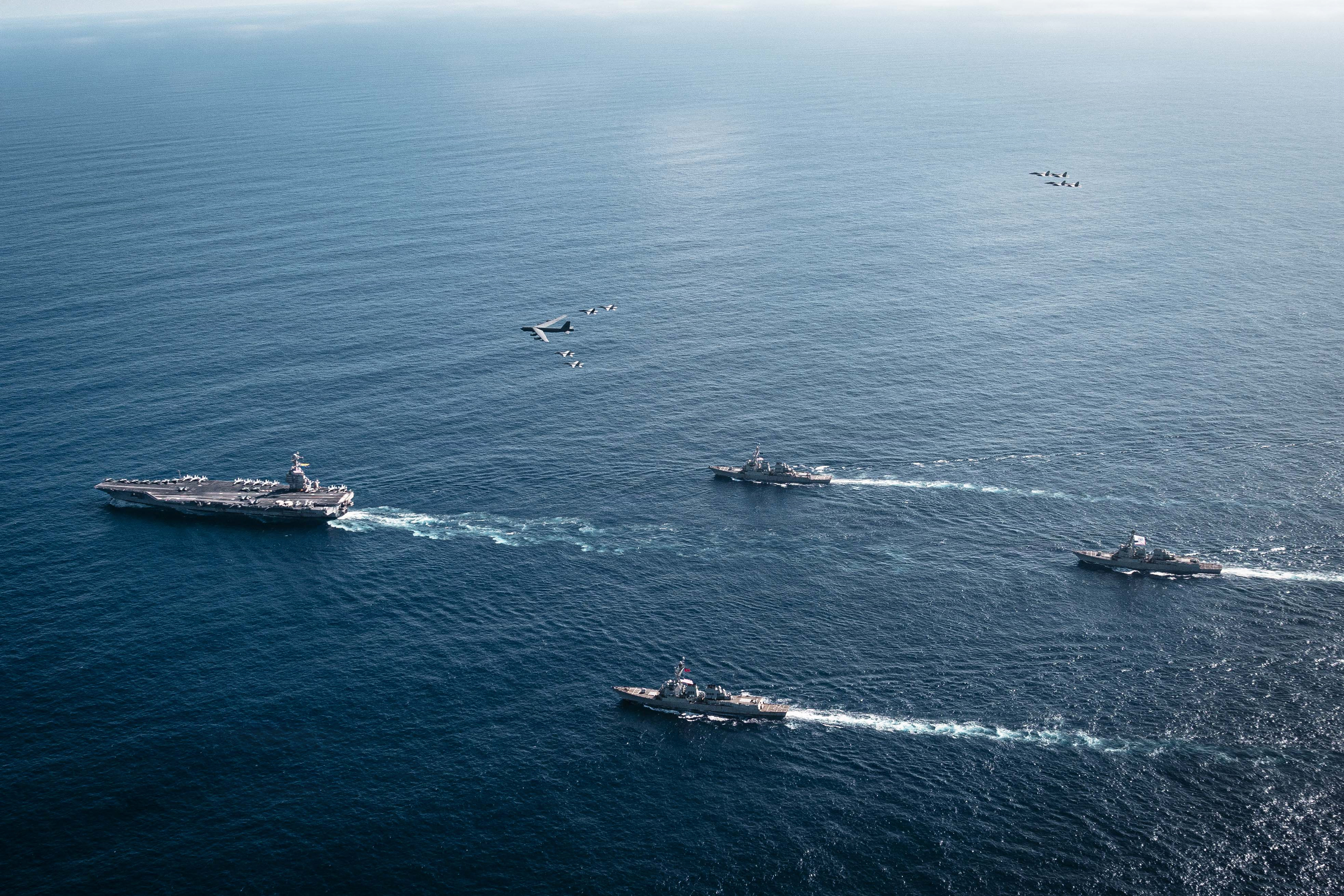
Later in the day, US President Donald Trump said the USS Gerald R. Ford, the world’s largest aircraft carrier, had been ordered to join the USS Abraham Lincoln and three guided-missile destroyers already deployed to the region.
Trump said he was weighing military options if negotiations failed to yield a new nuclear agreement.
“I’ll talk to them as long as I like, and we’ll see if we can get a deal,” he told reporters on Thursday. “And if we can’t, we’ll have to go to phase two. Phase two will be very tough for them.”
Tensions have remained high amid a US military buildup near Iranian waters. Speaking Wednesday at events marking the 47th anniversary of Iran’s 1979 Islamic Revolution, President Masoud Pezeshkian blamed a Western “wall of distrust” for slowing progress.
Washington has said any deal with Iran must include a ban on uranium enrichment, the removal of already enriched material, limits on long-range missiles, and a rollback of support for regional proxies. Analysts said such conditions would be “very difficult” for Iran to accept.
Despite the friction, the International Atomic Energy Agency (IAEA) has resumed dialogue with Teheran following recent strikes on Iranian targets.
At the Munich Security Conference, IAEA chief Rafael Grossi called the situation “complex and extremely difficult,” but said inspectors had returned to most sites except those recently attacked.
“We are at a very, very crucial moment,” he said. “We might be seeing the light at the end of the tunnel, in terms of having something over the next few days.”
Teheran has not commented on Grossi’s remarks. Iran had previously suspended cooperation with the agency after strikes on its nuclear facilities that it attributed to Israel and the United States.
Under the 2015 nuclear accord, formally known as the Joint Comprehensive Plan of Action, Iran agreed to cap uranium enrichment at 3.67 percent. Since the United States withdrew from the agreement in 2018, Teheran has exceeded those limits. Western officials say Iran now possesses uranium enriched to 60 percent, a level that could be further refined to weapons-grade material.
Iran denies seeking nuclear weapons and says its program is intended for peaceful energy purposes.
EU’s ‘incorrect approaches’ slammed
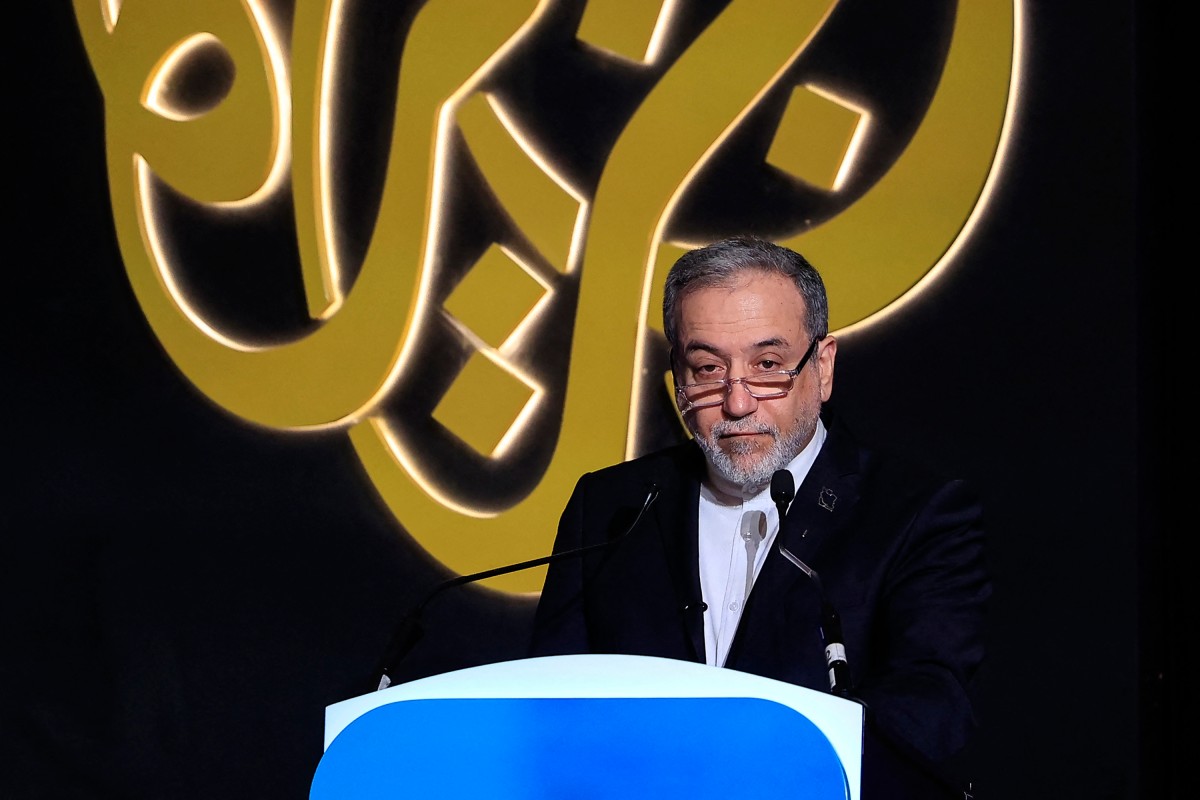
Meanwhile, Iranian Foreign Minister Seyed Abbas Araghchi slammed the European Union’s “incorrect approaches” toward the country, particularly the bloc’s designation of the Islamic Revolutionary Guard Corps as a terrorist organization and its “inappropriate interventions” in Iran’s internal affairs.
During a phone call with his Cypriot counterpart, Constantinos Kombos, whose country holds the EU’s rotating presidency, Araghchi also criticized the EU’s “incorrect” stances on developments in West Asia, urging the bloc to reconsider its “unconstructive” approaches toward Iran and the region.