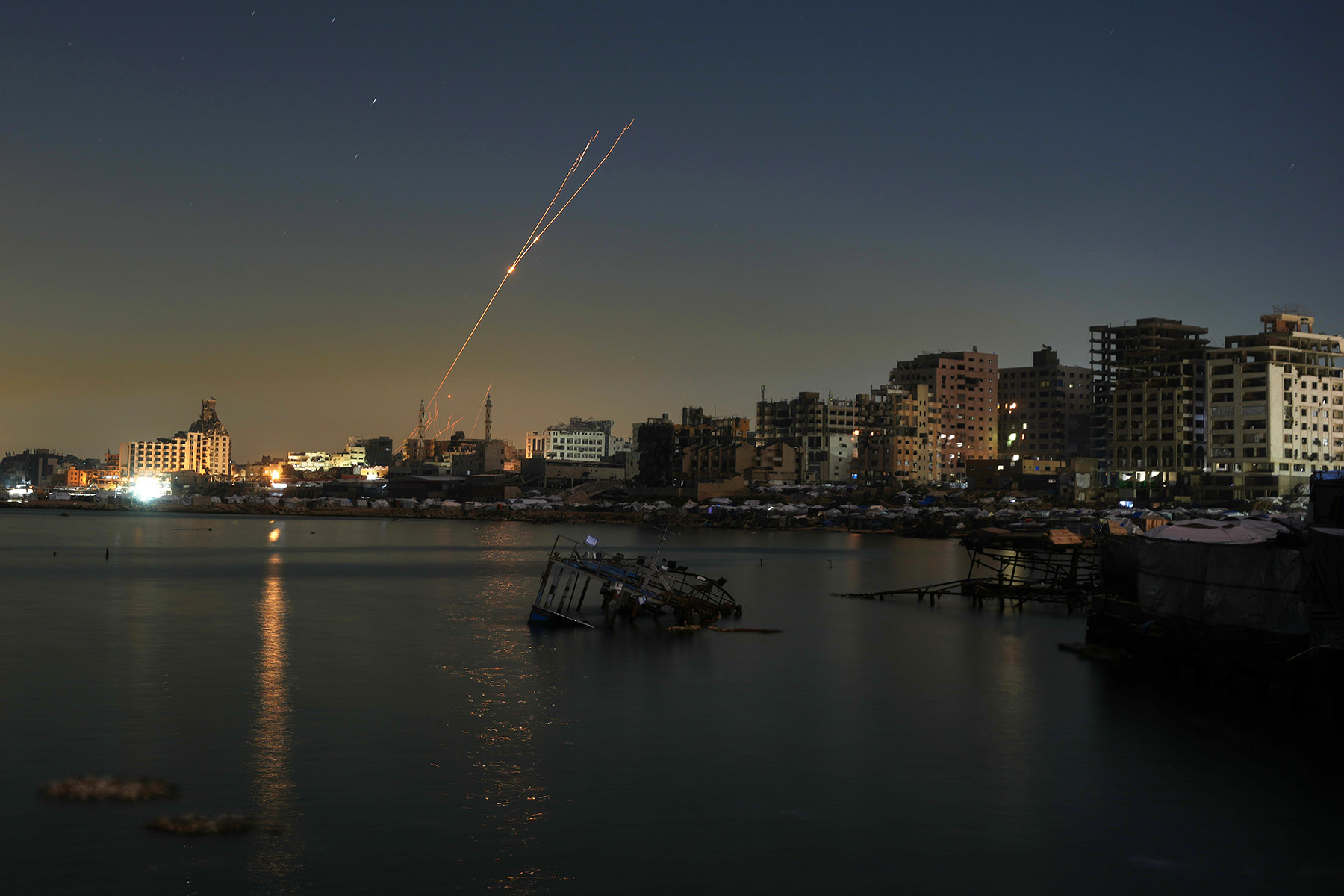


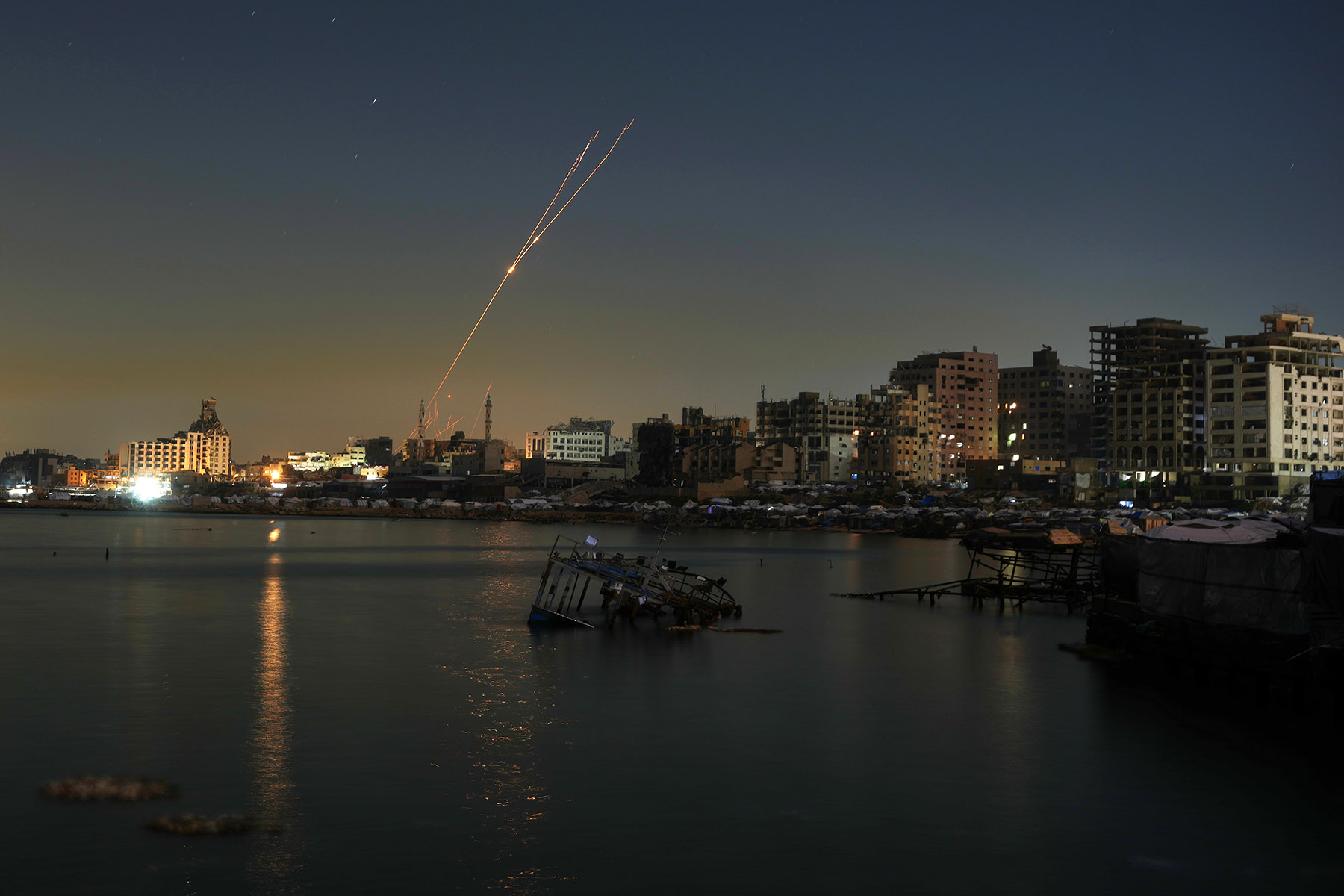
The continuing attacks of Israel and the United States against Iran have sparked renewed doubts about the commitments of parties to the Gaza ceasefire deal.
With heightened regional escalation and governments scrambling to ensure civilian safety in many countries, the situation lays bare contradictions in US policies in the region and weakens the Gaza truce, complicating Washington’s role as a “credible peace broker”, analysts said.
Sujata Ashwarya, a professor in the Centre for West Asian Studies at Jamia Millia Islamia University in New Delhi, said the US-Israel strikes “deepen the strategic contradiction at the heart of Washington’s regional policy” as it is “far harder to sustain credible Gaza diplomacy while widening a direct regional war”.
The immediate effect “is to make the Gaza ceasefire even more fragile”, she said.
Israeli military body COGAT said on Sunday that “several necessary security adjustments have been implemented”, including the closure of the crossings into Gaza, among them the Rafah crossing, “until further notice”.
“It should be emphasized that the closure of the crossings will have no impact on the humanitarian situation in the Gaza Strip,” it said.
Ashwarya said Rafah’s closure shows how quickly the humanitarian issue can become collateral to a broader escalation.
“Gulf Arab states are now caught in the most dangerous position: even where they do not seek this war, their hosting of US military assets makes them vulnerable to Iranian retaliation,” she said.
“In Iran, the killings of (supreme leader) Ali Khamenei and other senior figures created not clarity but uncertainty, with succession and internal stability suddenly in question,” she added.
“For Palestinians, the consequence is grimly familiar: Gaza risks being pushed further down the international agenda just as its humanitarian emergency becomes more acute.”
Palestinians have expressed fear that the continuing strikes may turn into a broader war, threatening the already dire situation in the occupied Palestinian territory.
‘Dangerous layer’
Arhama Siddiqa, a research fellow at the Institute of Strategic Studies Islamabad in Pakistan, said the joint US-Israeli strikes on Iran “inject a dangerous new layer into an already combustible region”.
“At a moment when Gaza remains devastated and a fragile ceasefire process hangs in the balance, escalation risks shifting the theater from a contained conflict to a broader regional confrontation,”Siddiqa said.
“Washington’s deeper military imprint may complicate its positioning as a credible broker, while Israel’s calculus of deterrence could invite reciprocal responses that widen the arc of instability.”
Gulf states, already walking a tightrope between security partnerships and regional de-escalation,”will likely push for containment to shield their economies and energy infrastructure from spillover”, she added.
“The recent escalation will inevitably prompt Gulf states to reassess the strategic costs of hosting foreign military assets, especially when such bases can draw them into conflicts not of their own making.”
However, Elie Al Hindy, chairman of the Security and Strategic Studies Department at the American University in the Emirates, does not believe the current situation will escalate into a broader conflict.
“I don’t think other countries will be involved or fully engaged in the war. Israel, of course, may take this opportunity to continue its actions in the West Bank and Gaza, but will not have the ability or bandwidth to do something major,” Al Hindy said.
Contact the writers at jan@chinadailyapac.com