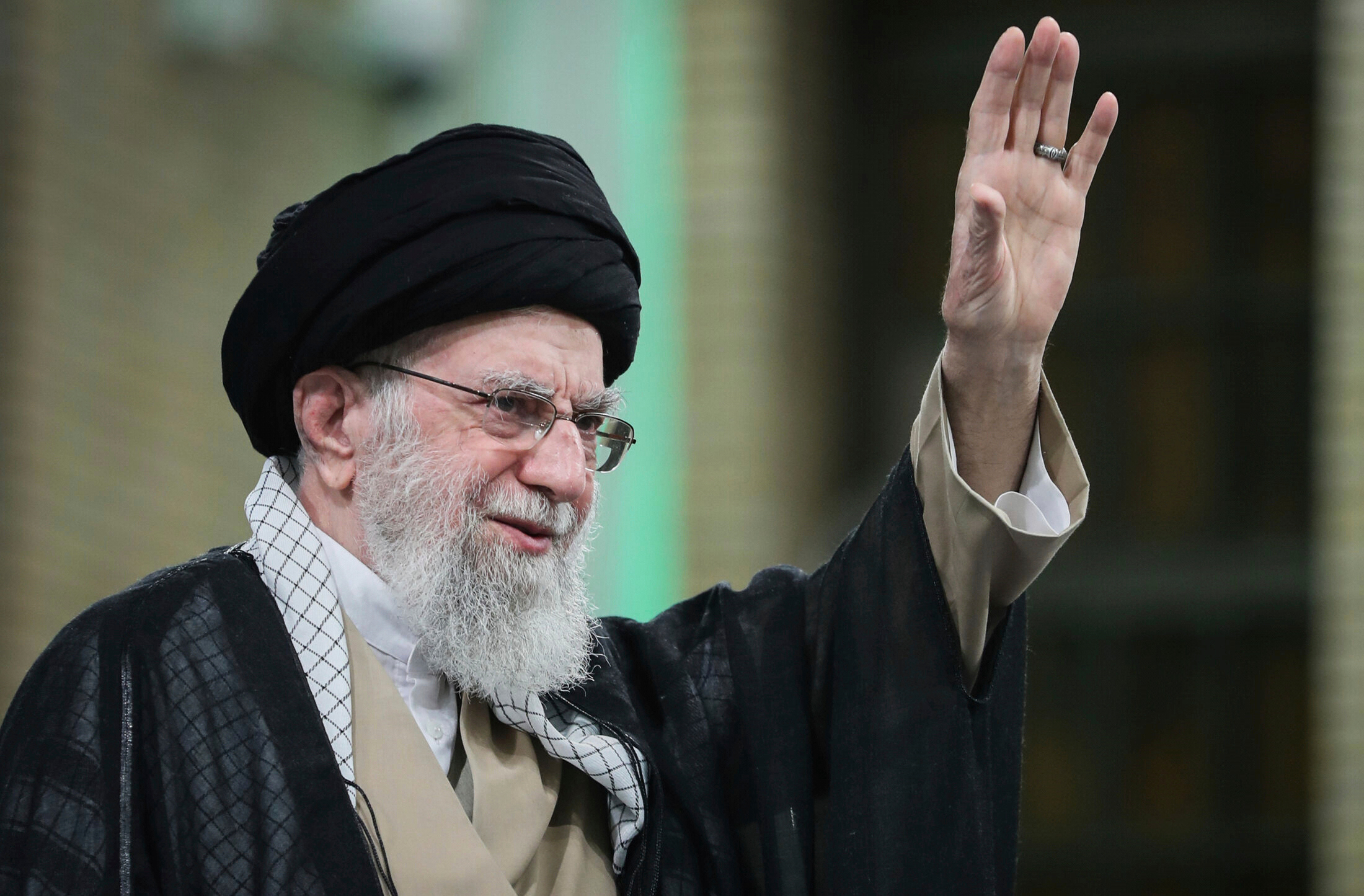


TEHERAN/WASHINGTON/CAIRO/ABU DHABI/DUBAI/MANAMA – Iran’s state media confirmed Sunday that Supreme Leader Ayatollah Ali Khamenei was killed in US-Israeli attacks on Saturday.
The Iranian government announced a 40-day mourning period after the report of the leader’s death.
US President Donald Trump had said on Saturday that Khamenei was killed in US-Israeli attacks earlier in the day and that the massive military campaign against Iran will continue.
“The heavy and pinpoint bombing, however, will continue, uninterrupted throughout the week or, as long as necessary to achieve our objective of PEACE THROUGHOUT THE MIDDLE EAST AND, INDEED, THE WORLD!” Trump said in a social media post.
Trump repeated his earlier call for Iran’s Islamic Revolutionary Guard Corps, armed forces and police to lay down their weapons in exchange for immunity.
In an interview with NBC News earlier on Saturday, Trump said that “most” of Iran’s senior leadership is “gone,” saying: “The people that make all the decisions, most of them are gone.”
Some 40 Iranian officials were killed in the US-Israeli attack on Saturday, CBS News reported, citing anonymous sources.
Fox News, citing Israeli officials, also said that Saturday’s strikes killed more than 40 senior Iranian security and government figures, noting that five to 10 top Iranian leaders were killed, along with Khamenei, who were meeting at a compound in Teheran.
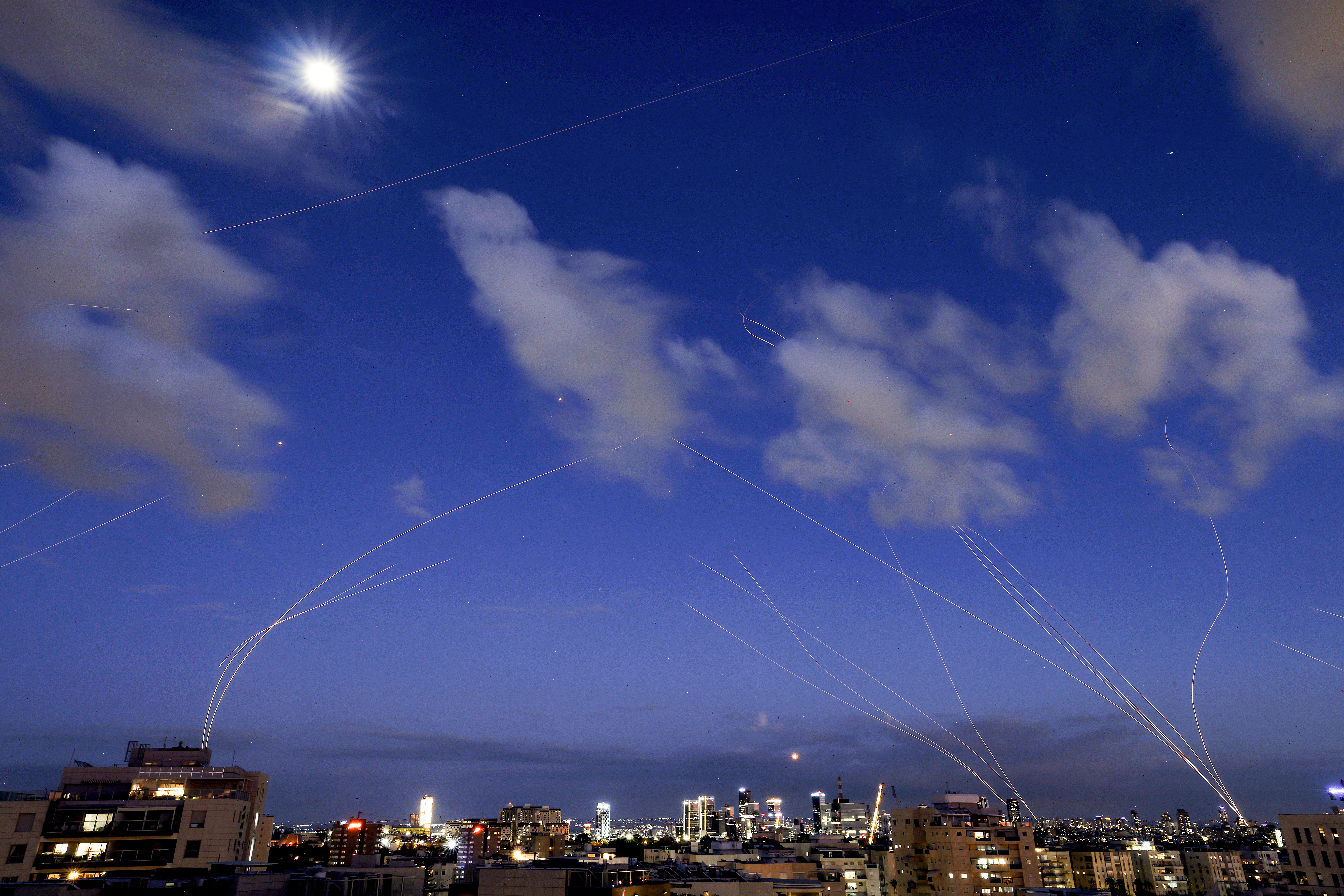
The United States and Israel on Saturday launched “major combat operations” against Iran, which retaliated with a series of counterattacks against Israel and US targets across the region, with explosions reported in Bahrain, Qatar, Kuwait, Jordan, the United Arab Emirates (UAE), and Saudi Arabia, among other countries.
Trump said the objective “is to defend the American people by eliminating imminent threats” from Iran, and the Israeli Defense Ministry said the country launched a “preemptive” strike against Iran “to remove threats to Israel.”
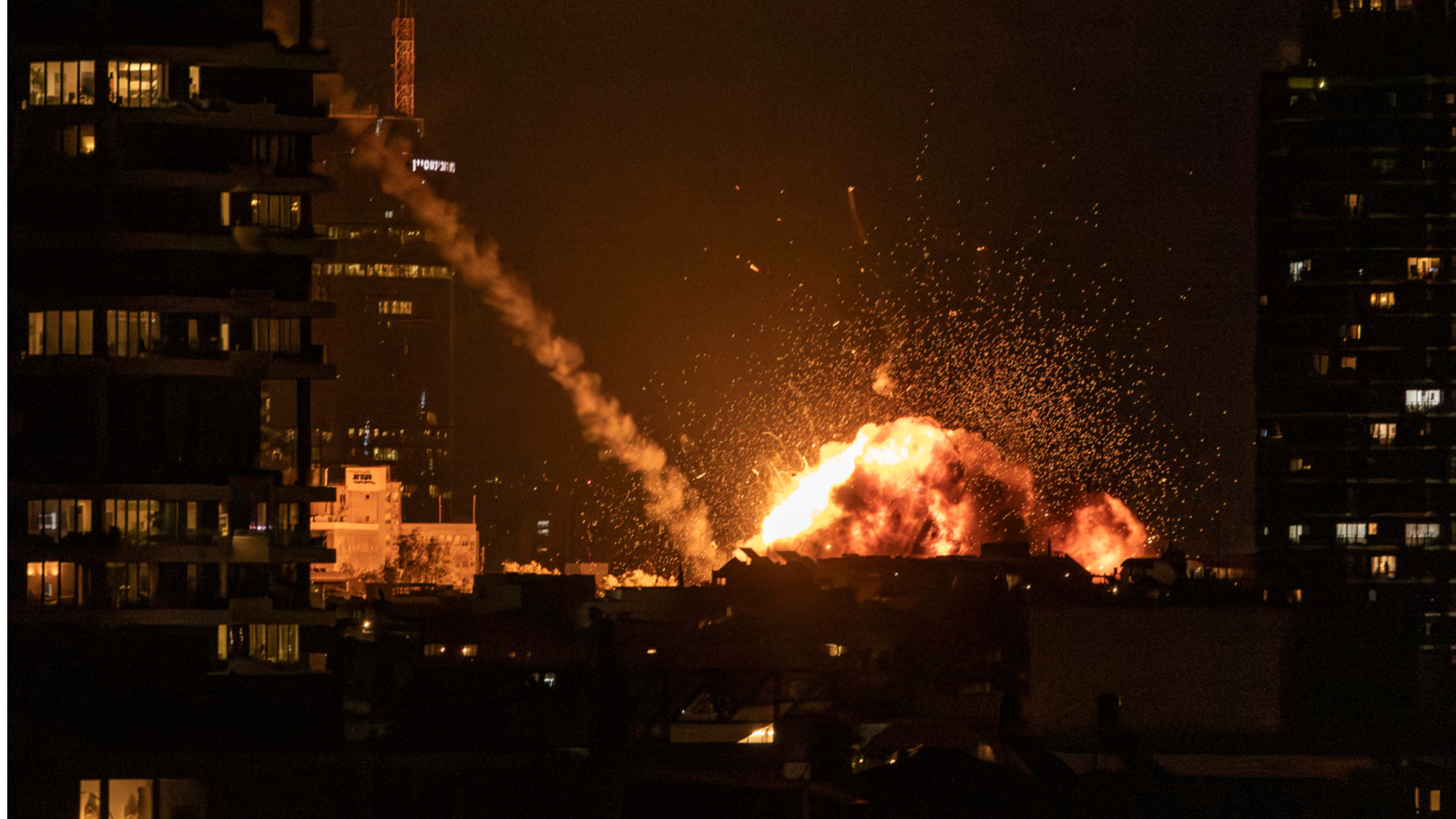
The Israeli military said in a statement that some 200 fighter jets completed an “extensive attack” against the missile array and the defense systems in western and central Iran, marking the largest military flyover in the history of the Israeli Air Force.
On Saturday night, Israeli Prime Minister Benjamin Netanyahu said in a live broadcast statement that the ongoing combat operations against Iran “will continue as long as necessary to ensure that Iran no longer poses a threat.”
Israel “will strike thousands of targets in the coming days,” he said in the statement, noting that the Israeli army is prepared for any scenario of response from “Iranian proxies” in the region.
The initiative, he claimed, is now in the hands of Israel and the United States, which he said are acting in full coordination.
Also on Saturday night, Israel Defense Forces (IDF) Spokesman Effie Defrin announced in a post on social media platform X that the IDF “eliminated” some senior officials of Iran’s defense leadership, including Ali Shamkhani, a senior advisor to Khamenei and secretary of Iran’s Defense Council.
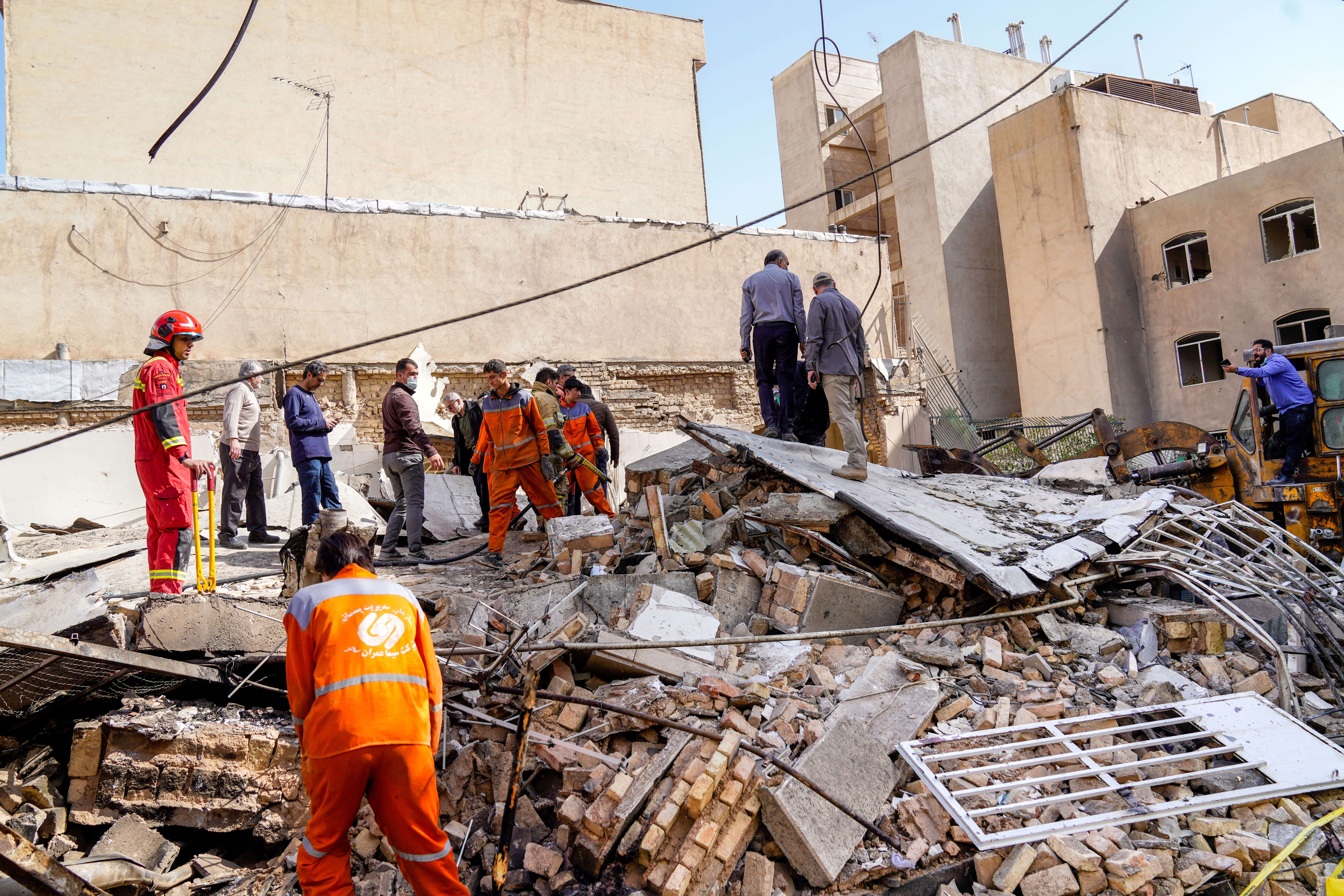
In Teheran, missiles hit areas near the offices of both Khamenei and President Masoud Pezeshkian. At least 24 of Iran’s 31 provinces were affected by US and Israeli strikes, the Iranian Red Crescent Society reported, adding that at least 201 people were killed and 747 injured in the joint attacks on Iran.
The airstrikes struck a girls’ school in southern Iran, and Iranian Foreign Ministry spokesman Esmaeil Baghaei said up to 160 people could have been killed there. Iran’s president condemned the incident as “inhumane.”
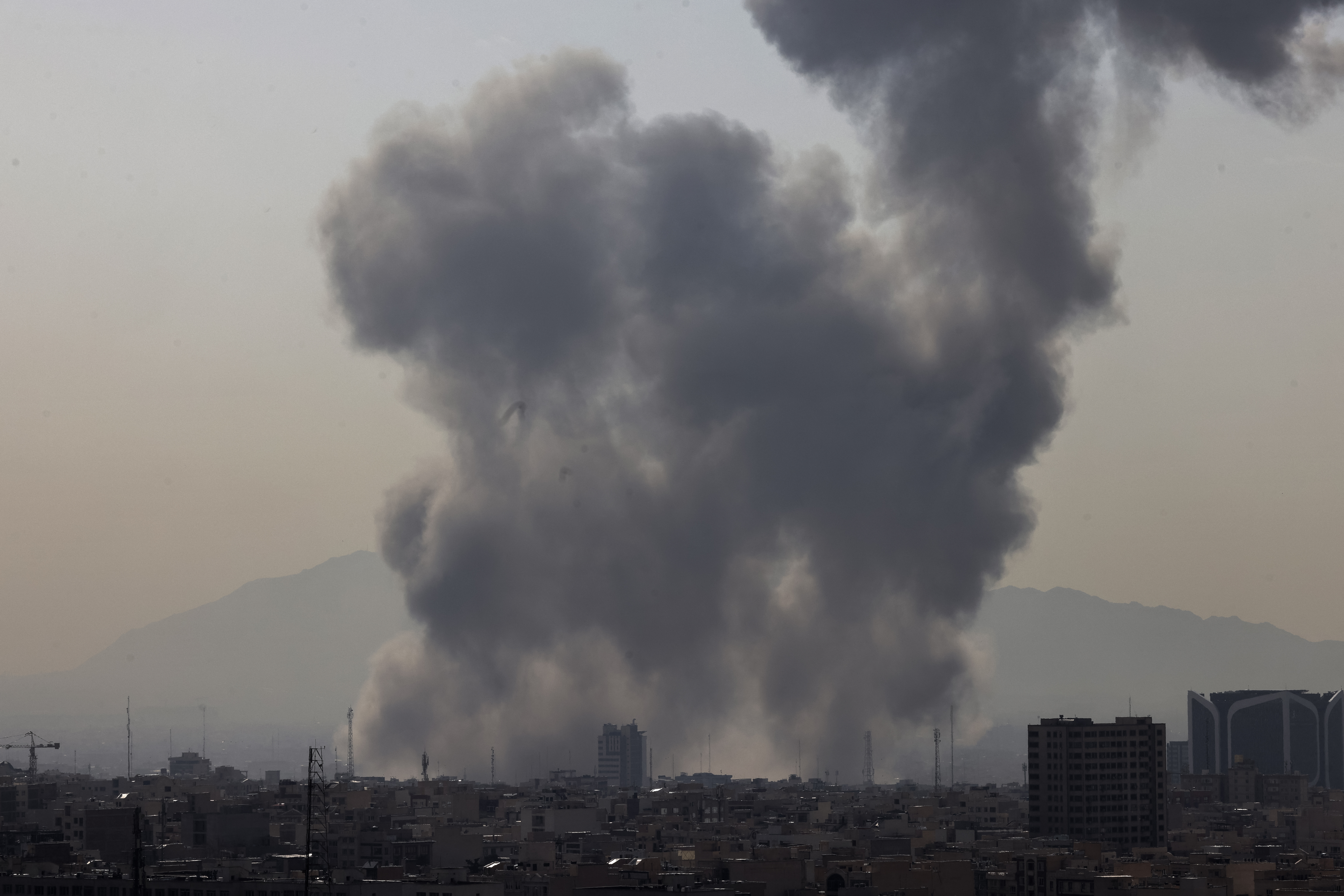
Another attack killed at least 15 people in a sports hall in Iran’s southern Fars province, the semi-official Fars news agency reported.
“In response to the aggression by the hostile and criminal enemy against the Islamic Republic of Iran,” the country’s Islamic Revolution Guards Corps (IRGC) said, “Iran’s large-scale missile and drone attack against Israel has started.”
The Iranian armed forces said all US military bases in the region are legitimate targets for Iran. According to the Fars news agency, Teheran struck military installations in several Gulf Arab countries hosting US military forces, including Qatar, Kuwait, the UAE, and Bahrain. It specifically named Al Udeid Air Base in Qatar and the US Navy’s 5th Fleet headquarters in Bahrain as targets.
An IRGC official said Iran had struck 14 US bases and killed hundreds of US soldiers. Yet Al Jazeera cited a spokesperson for the US military’s Central Command as saying that those claims are false.
Iranian media reported that the IRGC has closed the Strait of Hormuz to shipping, declaring the vital oil and gas waterway unsafe due to US and Israeli attacks.
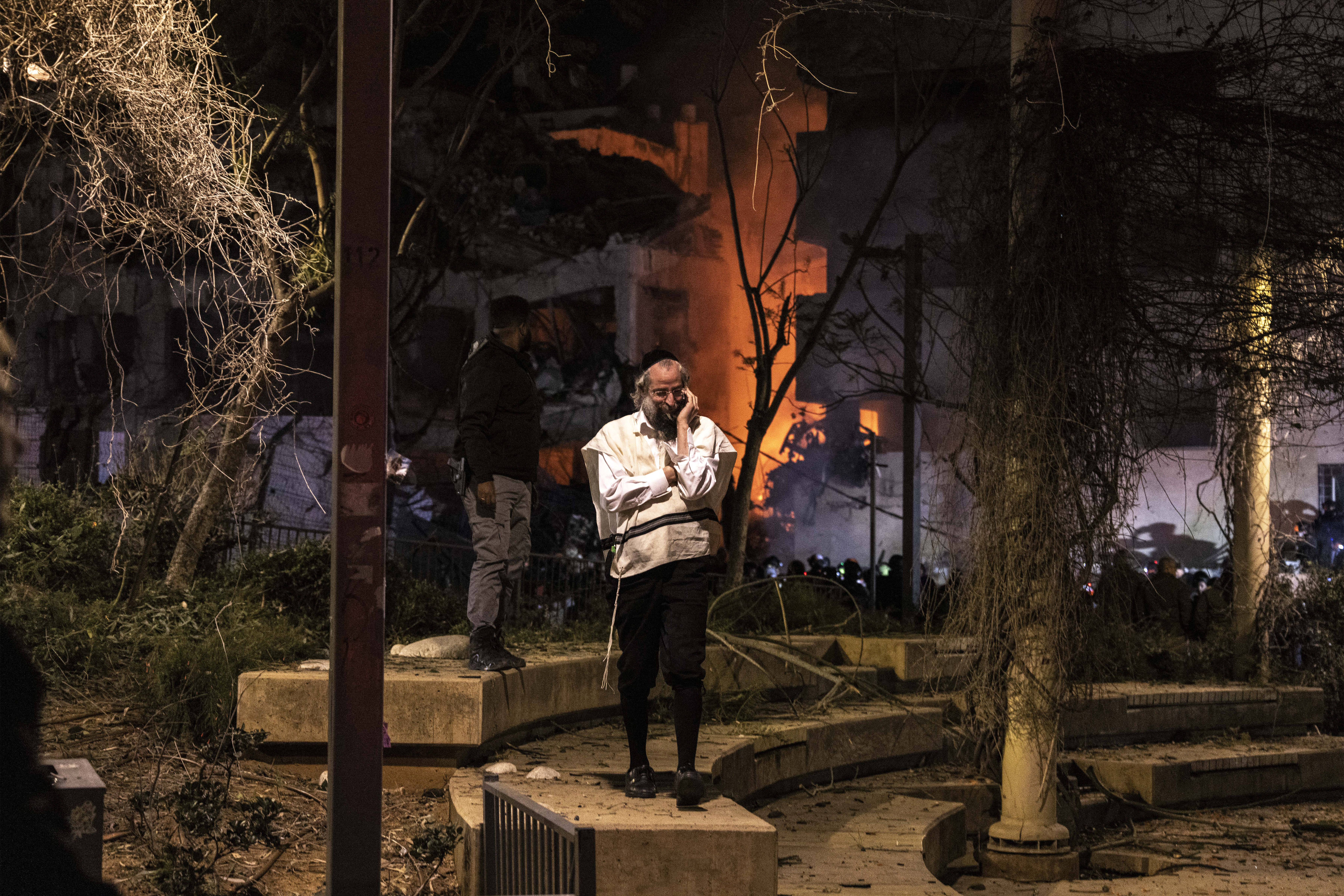
Late Saturday, at least 20 people were injured in Tel Aviv during Iran’s latest round of strikes on Israel, Israel’s national emergency service MDA reported. MDA said that a 40-year-old man is in a serious condition with a shrapnel wound.
In Kuwait, the Defense Ministry said three members of its armed forces were injured after debris fell at Ali Al Salem Air Base in the country’s northwest, which had earlier been targeted by Iranian ballistic missile attacks.
Bahrain
Bahrain’s Interior Ministry said early Sunday that the Bahrain International Airport was targeted by a drone, causing damage but no casualties.
The relevant authorities had immediately taken necessary measures to secure the site and deal with the incident, the ministry said in a statement on social media.
UAE
The UAE said on Sunday that the country’s air force and air defense forces have successfully intercepted and destroyed 137 ballistic missiles and 209 drones launched by Iran.
In a statement, the Ministry of Defence said 132 of the 137 missiles were destroyed, while five fell into the sea. Of the 209 drones detected, 195 were intercepted and 14 landed within the country’s territory and waters, causing limited collateral damage.
Some debris fell in scattered areas, resulting in minor material damage to civilian facilities, the ministry said, adding that authorities had taken necessary measures to ensure public safety and secure affected sites.
“The authorities in Abu Dhabi are dealing with an incident resulting from the interception of a drone that targeted Zayed International Airport, where the interception operation led to the fall of shrapnel, resulting in one death of Asian nationality and 7 injuries,” Abu Dhabi Airports said in an official statement.

The General Civil Aviation Authority (GCAA) said it had activated contingency plans to manage the impact of the attack and ensure the aviation sector continued operation.
About 20,200 travelers have been impacted by the flight rescheduling, with temporary lodging, meals and rebooking arrangements provided, the GCAA said.
Dubai authorities also confirmed that a drone had been intercepted and its shrapnel caused a limited fire on the exterior facade of the iconic Burj Al Arab hotel in the UAE.
Dubai Media Office said that civil defense teams were able to control the incident without any injuries reported.
Flights cancelled
In response to the sharp regional escalation, Kuwait, Qatar, and Syria, among others, temporarily closed their airspace as a precautionary measure. Several major airlines, including EgyptAir, Emirates, Turkish Airlines, and Saudi Arabian Airlines, canceled a number of flights to key regional hubs due to airspace closures.
The spike in tensions has drawn a flurry of reactions from across the world. In a phone call with his Iranian counterpart, Russian Foreign Minister Sergey Lavrov condemned the “unprovoked armed attack” by the United States and Israel on Iran, and urged an immediate halt to the strikes.
The Egyptian Foreign Ministry said in a statement that the escalating tensions risk expanding the scope of the conflict and plunging the entire region into chaos. The only way to ensure security and stability, it added, lies in diplomacy and dialogue.
Omani Foreign Minister Sayyid Badr bin Hamad bin Hamood Albusaidi, the mediator of recent Iranian-US negotiations, expressed his dismay in a post on social media. “Active and serious negotiations have yet again been undermined,” he said, urging the United States not to get sucked in further.
The International Atomic Energy Agency (IAEA) is closely monitoring the developments in the Middle East. In a statement on X, the nuclear watchdog urged “restraint to avoid any nuclear safety risks to people in the region.”
Labeling the regional situation an “immense danger,” the Arab League urged all parties involved to work toward rapid de-escalation and spare the region from the devastating consequences of further instability and violence.
UN human rights chief Volker Turk condemned Saturday’s strikes in the Middle East and urged all parties to return to negotiations, saying that attacks would only bring “death, destruction and human misery.”
The UN Security Council decided to hold a meeting later in the day regarding the US-Israeli attack on Iran, where UN Secretary-General Antonio Guterres will act as the speaker.
In a letter to the UN secretary-general, Araghchi said the council must “address the US and Israeli regime’s acts of aggression” and “take the necessary and immediate measures to halt this unlawful use of force.
Oil markets, currently closed for the weekend, are bracing for significant price swings next week. Experts worry that the potential for disruption to global oil supplies could trigger a sharper price spike and more prolonged market impact.
The latest flare-up came after the United States and Iran wrapped up their third round of indirect talks earlier this week and agreed to resume negotiations next week.
It is reminiscent of last June when, during negotiations between Washington and Tehran, Israel launched a surprise attack on Iran and triggered the “12-day war,” during which the United States bombed Iran’s critical nuclear facilities.
Meanwhile, US Central Command (CENTCOM) said Saturday the US military campaign named Operation Epic Fury is focused on dismantling Iran’s security apparatus, prioritizing locations that posed an imminent threat.
“US and partner forces began striking targets at 1:15 am ET,” said the command in a statement on X. “Targets included Islamic Revolutionary Guard Corps command and control facilities, Iranian air defense capabilities, missile and drone launch sites, and military airfields.”
There have been no reports of US casualties or combat-related injuries, said the command, adding that the US forces “successfully defended against hundreds of Iranian missile and drone attacks” and “damage to US installations was minimal and has not impacted operations.”
For the first time in history, the US military is using one-way attack drones in combat during the ongoing operation, said the command, noting that these low-cost drones are modeled after Iran’s Shahed drones.
The US strikes included precision munitions launched from air, land, and sea, the command said.
The ongoing campaign involves the largest regional concentration of US military firepower in a generation, according to the command.
General Kenneth F. McKenzie Jr, a former head of the US Central Command, told US media outlets on Saturday that the next 72 to 96 hours will be crucial to determine whether Iran can sustain a heavy barrage of retaliatory missile strikes against US bases and partners in the Middle East region.