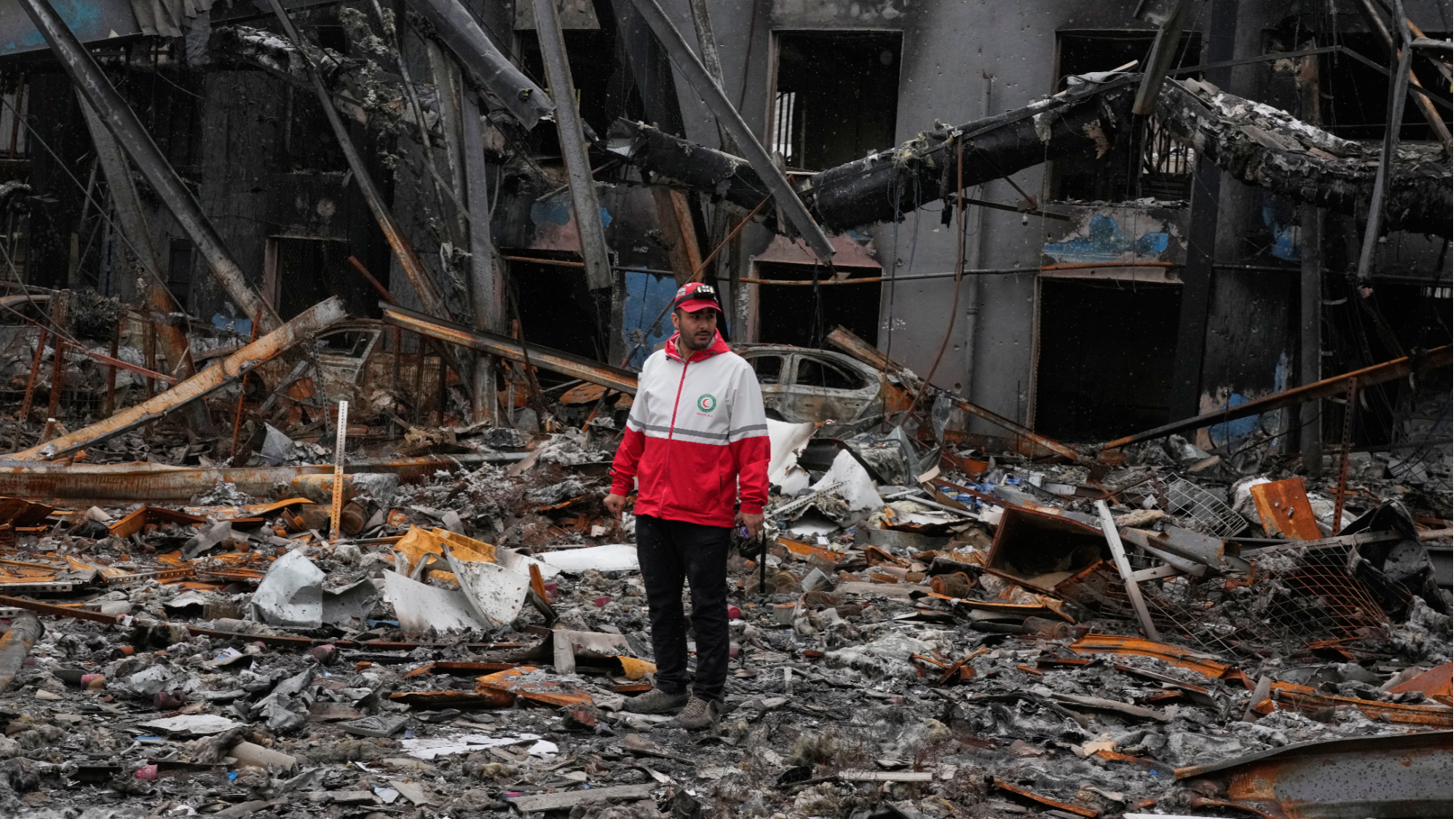


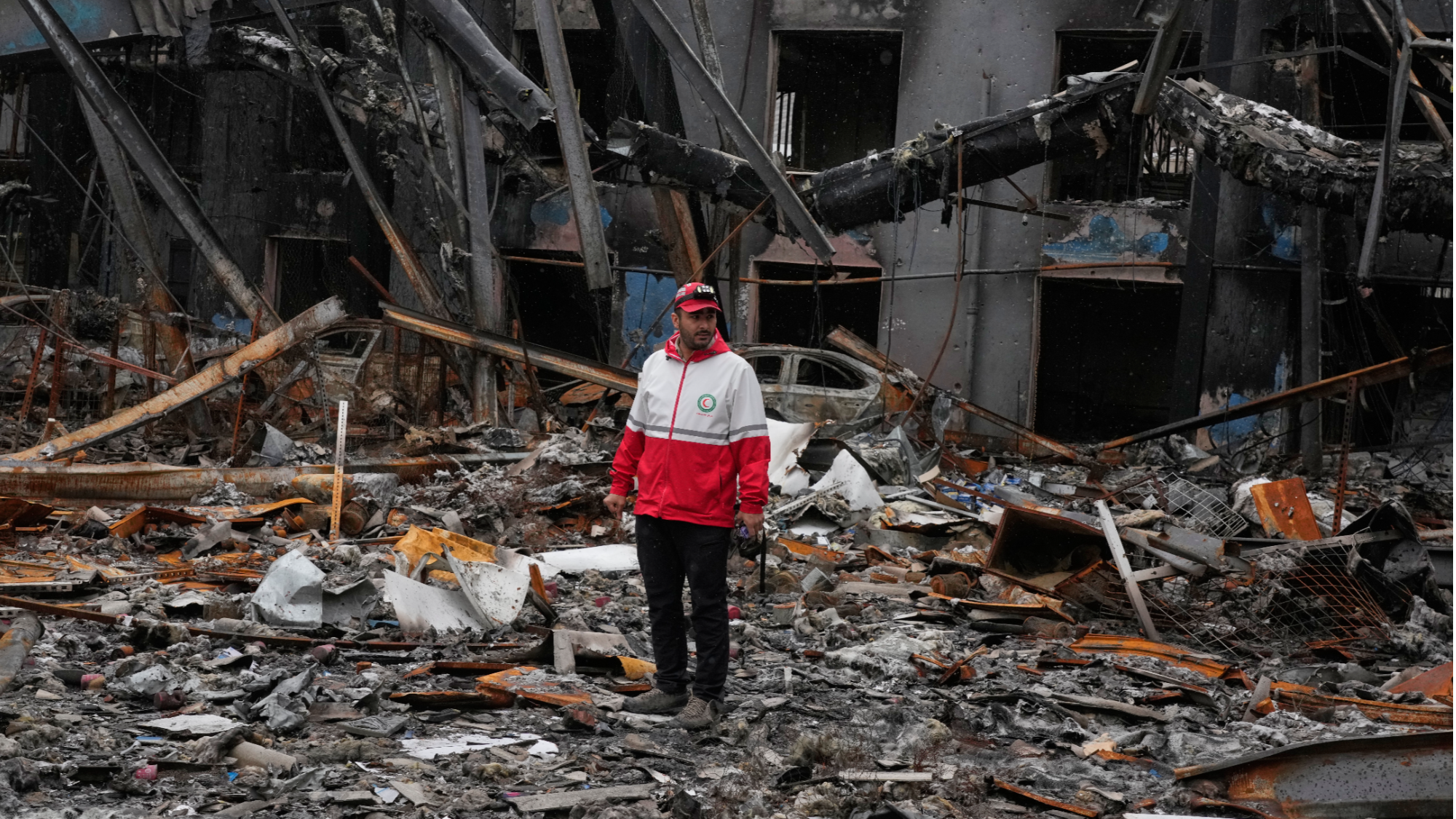
kept exchanging fire with Israel and the United States on Friday, with strikes expanding beyond military sites to civilian infrastructure, as US President Donald Trump issued his latest threat to strike Iranian bridges and power plants.
With the war about to enter its sixth week, Israel, Bahrain and Kuwait issued warnings about incoming missiles, despite claims from the US and Israel that Iran’s military capabilities had been all but destroyed.
Iranian witnesses also reported strikes in and around Tehran and the central city of Isfahan.
Trump has stepped up his rhetoric in recent days as negotiations with Iran showed little sign of progress. The US military “hasn’t even started destroying what’s left in Iran. Bridges next, then electric power plants,” Trump wrote on social media late on Thursday.
He also posted a video of the US bombing a newly constructed bridge in Tehran. The B1 bridge, a key traffic artery, was scheduled to open to traffic this year. According to Iran’s state media, eight people were killed and 95 others were wounded in the attack.
But “striking civilian structures, including unfinished bridges, will not compel Iranians to surrender,” Iranian Foreign Minister Abbas Araghchi said.
RELATED ARTICLES
In response, Iran’s armed forces vowed that “more crushing, broader and more devastating” attacks were in store. Iran’s Fars news agency later listed several bridges in Saudi Arabia, Kuwait, Abu Dhabi and Jordan — all of which host US military bases — as potential targets.
Quoting Iran’s Islamic Revolution Guard Corps navy command, the Tasnim news agency also said was targeted on Thursday. But in a statement, the Government of Dubai Media Office termed it “fake news.”
The IRGC has previously warned it would target major US technology companies if tensions escalate with Washington, saying more than a dozen firms could become potential targets.
Meanwhile, Yemen’s Houthi militia said they had launched a fourth attack on Israel, firing a “barrage of ballistic missiles” at targets in Tel Aviv, extending their involvement in the regional conflict.
The war began on Feb 28 when the US and Israel attacked Iran. Tehran responded by launching its own attacks on Israel and Gulf states housing US bases. Joint US-Israeli strikes in Iran and Israeli attacks in Lebanon have killed thousands and displaced millions.
The war has intensified pressure on global shipping, with the Strait of Hormuz — a conduit for one-fifth of the world’s seaborne oil — largely closed. Oil prices surged as Asian financial markets rose moderately during cautious trading. The price of Brent crude was around $109.03 per barrel early on Friday, up more than 50 percent from pre-war levels.
“The key question in all investors’ minds is ‘when is this going to be over?’” said Russel Chesler, head of investments and capital markets at VanEck Australia.
The United Kingdom chaired a virtual meeting on Thursday of some 40 countries to explore ways to restore freedom of navigation in the strait, but it did not produce any specific agreement.
Tehran offered a competing vision for future control of the strait, saying it was drafting a protocol with neighboring Oman that would require ships to obtain permits and licenses before transiting the waterway.
Bahrain has proposed a draft United Nations Security Council resolution that would authorize the use of force to ensure free transit, though the US-backed measure has divided members and the vote has been rescheduled.
Khalifa Shaheen Al Marar, the UAE’s minister of state, also said in an interview on Thursday that the emirates stand ready to contribute to efforts ensuring the safety of maritime routes in the Strait of Hormuz amid ongoing tensions.
However, French President Emmanuel Macron said the expectation that the Strait of Hormuz could be reopened by force was unrealistic.
Macron said a military operation “would take an infinite amount of time and would expose anyone passing through the strait to coastal threats from (Iran’s) Revolutionary Guard.” The reopening of the strait “can only be done in coordination with Iran,” through negotiations that would follow a potential ceasefire, he added.